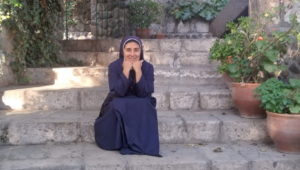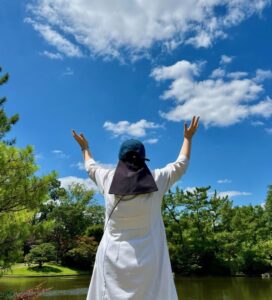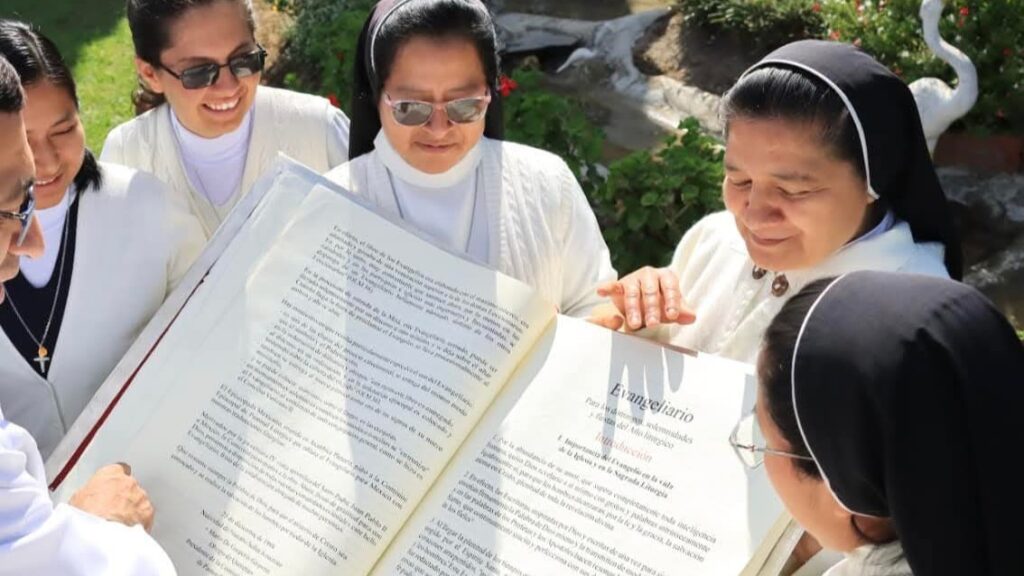
Suite aux célébrations du Jubilé du Bicentenaire à Rome l'an dernier, auxquelles elle a participé, le Bureau de la Communication a interviewé Sœur Enith Pangul Apolo, de la Province d'Équateur, sur sa vie de sœur contemplative.
Quand avez-vous ressenti l'appel à être Sœur Contemplative du Bon Pasteur ? Qu'est-ce qui vous a poussée à y répondre ?
J'ai ressenti l'appel de Dieu à la vie contemplative après avoir découvert les deux styles de vie au sein de la congrégation. J'ai alors compris que ma vocation était d'être avec Dieu – dans le silence, dans la prière, au quotidien, dans une vie cachée et simple, en me donnant entièrement à tout ce que je fais, avec la grâce de renouveler encore et encore l'ordinaire chaque jour, afin que cette vie contemplative ait sens et raison d'être.
Savoir que, par le silence et la prière, on plaît à Dieu, et que de là découle un engagement envers les plus démunis. Une autre raison pour laquelle j'ai répondu à cet appel est le témoignage et le don de soi des sœurs : leur dévouement, leur manière de vivre les moments de prière, de silence, de travail et d'étude, la joie de leur choix de vie et la conviction qu'il est possible de vivre à l'écart du tumulte du monde sans oublier la réalité, mais au contraire en l'accueillant et en priant chaque jour pour les besoins de l'Église et du monde.
The contemplative life is often described as a “hidden life.'' La vie contemplative est souvent décrite comme une « vie cachée ». Comment, selon vous, ce mode de vie devient-il un puissant témoignage du zèle et du charisme de la mission du Bon Pasteur ?
Le paradoxe réside dans le fait que ce qui est caché est le plus transformateur. La vie contemplative ne devient pas un témoignage parce qu'elle est vue, mais parce qu'elle est transparente. Je dirais qu'elle est comme la racine d'un arbre : invisible, et pourtant sans elle, l'arbre ne porte ni fruit ni ombre. Ainsi, la vie contemplative soutient en silence, nourrit sans faire de bruit. Je crois que le témoignage ne réside pas dans les actions, mais dans un autre être, dans une prière vécue en profondeur, incarnée dans la réalité et pour la mission, centrée sur Dieu.
En repensant à votre vie religieuse et aux 200 ans des sœurs contemplatives, de quoi êtes-vous le plus reconnaissante, et quel héritage les sœurs contemplatives laissent-elles aux générations à venir ?
Je suis reconnaissante à Dieu pour l’inspiration donnée à sainte Marie Euphrasie et à toutes les sœurs qui ont œuvré à la fondation de cette branche contemplative au sein d’une congrégation apostolique – et pour la manière dont les chemins de compréhension, d’écoute, d’accueil et de confiance se sont peu à peu ouverts.
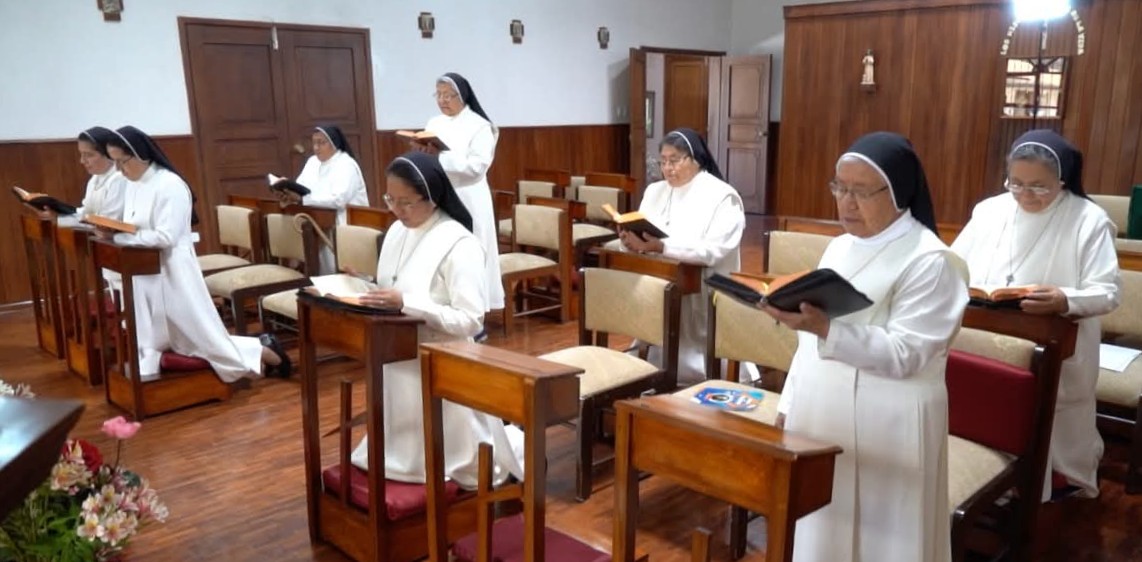
L’héritage d’une fidélité silencieuse – de la présence, qui est une manière d’aimer. Placer Dieu au centre. Elles nous ont enseigné, sans paroles, que Dieu est le guide et l’axe de la vie. Que la prière transforme l’histoire. Que le silence n’est pas le vide ; il est présence. Que la vie contemplative est féconde pour le monde. Que la tendresse de Jésus, le Bon Pasteur, nous devons la vivre entre nous – une tendresse qui n’envahit pas, mais qui nous accompagne véritablement.
Qu’ont représenté pour vous personnellement les célébrations du bicentenaire ? Quel impact ont-elles eu sur vous ?
Ces célébrations ont été très importantes pour moi – avant tout, elles ont été synonymes d’engagement, de renouveau, d’ouverture, du désir d’aller plus loin, de la certitude d’être appelée à donner le meilleur de moi-même, à continuer de faire éclore le diamant que je suis, à confier ma vie entre les mains de Dieu, dans une action de grâce constante pour tant de dons reçus ; de gratitude pour la vie de sainte Marie Euphrasie et pour chaque sœur qui a tracé le chemin qui nous a permis d’être ici aujourd’hui ; de gratitude envers l’équipe pastorale pour toute la préparation et les expériences vécues, afin de continuer à transmettre cet héritage aux nouvelles générations.
Comment envisagez-vous l’expression future de la dimension contemplative de la vie du Bon Pasteur, et quel message d’espoir et d’encouragement souhaiteriez-vous offrir à celles et ceux qui cherchent un sens plus profond à leur existence dans le monde d’aujourd’hui ?
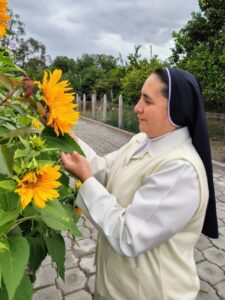 J'imagine qu'à l'avenir, la vie contemplative du Bon Pasteur s'exprimera de manière plus intégrée et accessible, adaptée aux défis et aux réalités du monde, avec des sœurs prêtes à partager la spiritualité et le charisme au quotidien, marquées par une profonde connexion à la nature, au cœur de leur être. Ceci se verra dans des leaders spirituelles et profondément humaines qui, par la prière, la méditation et la contemplation, aident chacun à trouver la paix et la sérénité dans ce monde en perpétuel changement.
Quant à ce qui donne espoir, je crois qu'il se nourrit de la résilience humaine et spirituelle – la capacité, malgré les difficultés, à chercher la bonté, l'amour et la miséricorde de Jésus, le Bon Pasteur. L'espoir d'être des femmes de foi, pour qui une vie pleine et riche de rencontre avec «L'Unique, l'Unique Tout» est possible, où la spiritualité est source de guérison pour l'âme.
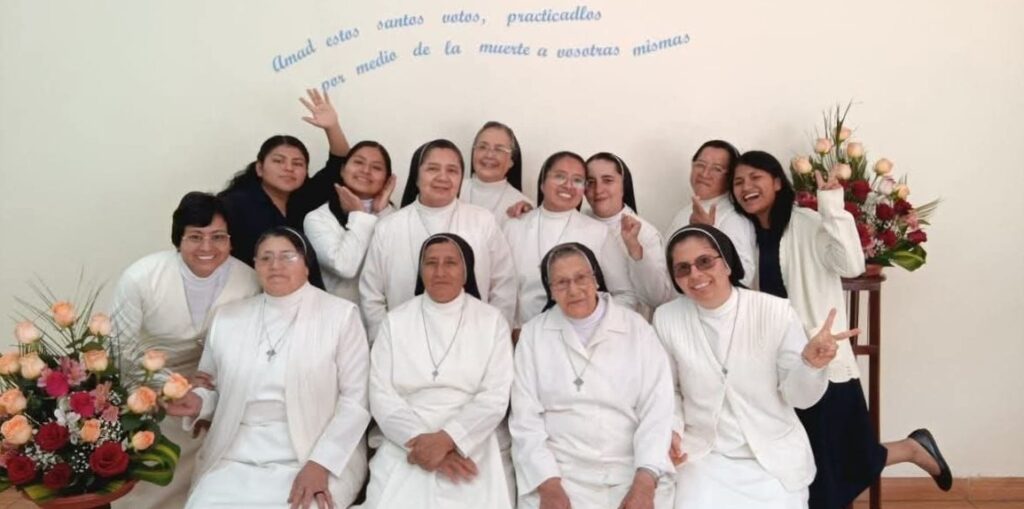
Mon message est : «Vous n’êtes pas seules dans votre quête.» Chaque pas que vous faites vers l’amour, la paix et la compassion est un pas vers le cœur même de l’humanité. Prenez le temps du silence pour écouter la voix de votre âme et reconnaître la présence du divin au quotidien.