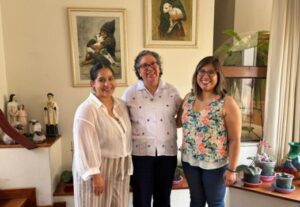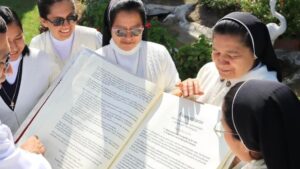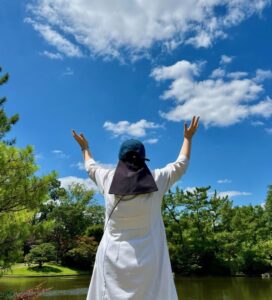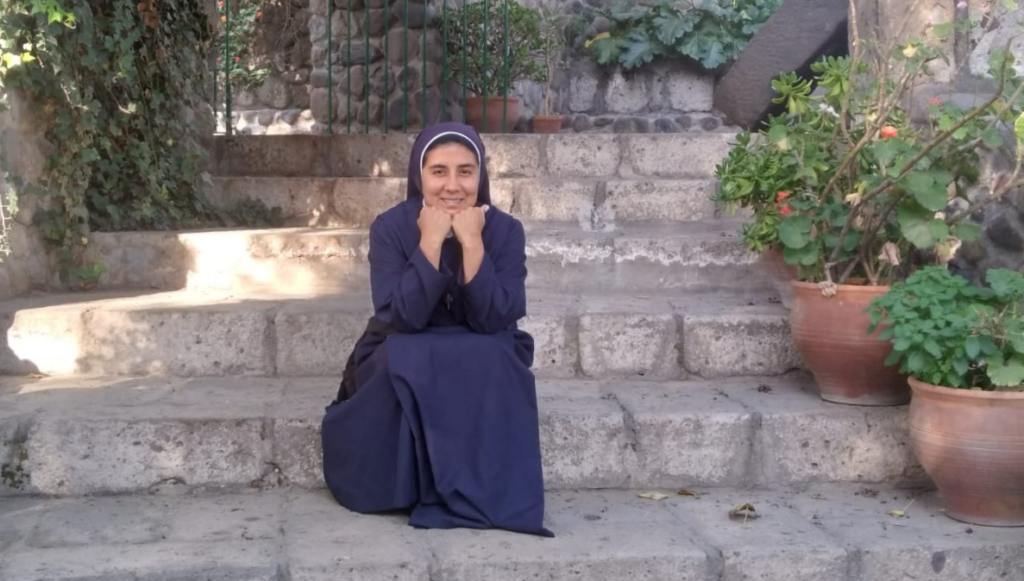
Le Bureau Communication s'entretient avec Sœur Rosa Vanessa, Province du Pérou, suite à sa récente participation aux célébrations du Bicentenaire, au sujet de sa vocation, de sa vie communautaire et de ses espérances pour l'avenir.
Comment avez-vous reçu votre vocation de sœur contemplative du Bon Pasteur ? Qu'est-ce qui vous a conduite à répondre à cet appel ?
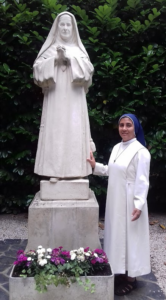 J'ai découvert ce chemin avec Dieu au fil d'une évolution, enracinée dans une relation personnelle et intime avec lui. Un profond besoin de paix intérieure et le désir de me donner et servir autrement : par la prière pour nos frères et sœurs les plus vulnérables, avec lesquels notre congrégation et toute l'Église œuvrent. Nombre d'entre eux ont besoin de cette rencontre avec le Dieu miséricordieux qui nous surprend chaque jour par l'immensité d’un Cœur de Père et de Mère.
J'ai été profondément touchée par le charisme centré sur la miséricorde et la compassion, qui recherche la justice et la dignité humaine et révèle la tendresse de l'amour de Dieu. J'ai également été touchée par les deux styles de vie: l'action apostolique et l'action contemplative, qui se nourrissent mutuellement pour perpétuer l'héritage de notre sainte fondatrice, Marie Euphrasie Pelletier. En nous fondant, elle nous a confié la mission d'être comme le Bon Pasteur qui part à la recherche de l'autre.
Pour ceux qui ne connaissent pas la vie contemplative, comment décririez-vous votre rythme quotidien ?
La vie contemplative, tournée vers la profondeur et vécue dans la simplicité de l'être, est belle. Notre propre vie, enrichie par la liturgie, nous parle de la beauté de Dieu et nous invite à la cultiver dans nos activités quotidiennes et dans notre être. Nous suivons un rythme équilibré où le silence, la prière et la lecture spirituelle sont privilégiés ; cela inclut aussi des temps d'étude biblique et d'autres tâches d'apprentissage, nous permettant d'entrer plus profondément dans le spirituel avant d'entreprendre nos activités extérieures.
Des moments de travail que nous accomplissons fidèlement, sans perdre l'esprit de contemplation qui guide notre vie, et nous participons également à la vie fraternelle de la communauté. Nos cultures, nos dons et notre créativité nous permettent de rire ensemble et de savourer les richesses de la vie : l’amitié et l’amour de Dieu.
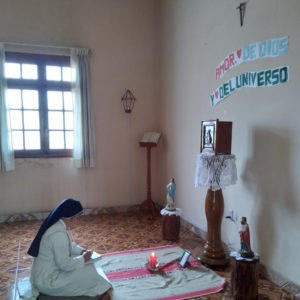 Parallèlement, la vie contemplative n’est pas isolée du monde ; elle est une présence priante qui soutient la mission apostolique. Cet élan de prière accompagne l’œuvre de notre mission. Dieu est si généreux lorsqu’on s’adresse à son grand cœur, et de cette rencontre jaillit un amour miséricordieux. Notre vie, bien que paraissant cachée, se révèle à travers la profondeur de notre relation avec Dieu, nous permettant d’accompagner spirituellement les autres et, si nécessaire, par une présence directe – ouvrant ainsi nos communautés aux réalités du monde qui aspirent à un accompagnement plus intime. Contemplatives, fidèles au charisme, nous restons attentives et prêtes à répondre par des actions concrètes lorsque cela est requis.''Le Bon Pasteur part à la recherche de la brebis perdue'': nous menons un apostolat silencieux de prière qui se traduit en actions concrètes.
Comment la prière et la présence des sœurs contemplatives ont-elles discrètement soutenu la mission du Bon Pasteur et fortifié celles et ceux qui servent en première ligne de l’apostolat ?
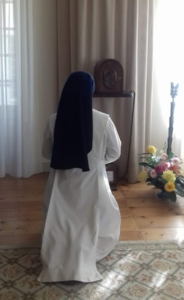 En intégrant l’action apostolique et l’action contemplative, notre recherche commune du visage de Dieu – par la prière, le silence et le travail quotidien, centré sur la mission – nous rend conscientes d’être des instruments de la réconciliation et de la miséricorde divines. Par le vœu de zèle et notre vie cloîtrée selon nos Constitutions, nous participons pleinement aux projets menés par notre congrégation et l’Église, ancrés dans la réalité de la souffrance humaine.
À travers les œuvres de la congrégation, la vie contemplative s’accomplit dans une prière féconde et incarnée, dans l’hospitalité et dans une écoute attentive de nombreux frères et sœurs.
Dans un monde qui valorise la visibilité et la rapidité, que nous enseigne la vie contemplative sur l’amour, la liberté et ce qui demeure véritablement ?
La vie contemplative, dans son silence, révèle le caractère sacré de chacun – non pas comme une entité qui se consume, mais comme un être humain aimé, créé pour continuer à donner l’amour. Ce n’est que par l’amour que nous pouvons atteindre la liberté à laquelle aspire notre être : une liberté qui unit désirs et actions, nous permettant de co-créer et de continuer à donner la vie, même au cœur de nos vulnérabilités et de nos fragilités. En les accueillant, nous pouvons observer la force de l’âme consumée par le mystère de l’inimaginable, où la grâce seule suffit à la libération.
Que représentaient pour vous, personnellement, les célébrations du bicentenaire ? Quel impact ont-elles eu sur vous ?
Elles ont véritablement été une expérience de profonde gratitude en mon cœur et mon âme ; c’était comme composer un poème, vers par vers, dédié à chaque étape, à chaque thème, où Dieu me surprenait à chaque instant d’écoute – du cœur et de l’esprit – me faisant désapprendre et redécouvrir, dans une célébration, le don de ma vocation contemplative et l’appel constant que je continue de recevoir dans le contexte où je vis. Un souffle de renouveau demeure, m’encourageant à poursuivre mon chemin, à partager la vie et l’espérance. Je disdemeure,'' car cette expérience, ce moment, continuent de s’inscrire dans l’histoire, tissés au cœur même de Dieu et de l’univers.
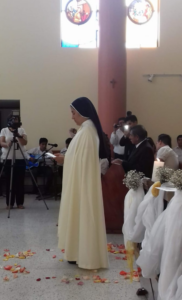 En repensant à ma vie religieuse et aux deux siècles de la branche contemplative, je suis profondément reconnaissante de la fidélité de Dieu tout au long de ce temps, d’appartenir à cette grande famille du Bon Pasteur, de me souvenir d’avoir participé à une histoire d’amour sacrée – vécue, discernée et vécue sous le regard de Dieu – et de la richesse d’être une congrégation internationale. Je suis reconnaissante car Dieu m’a appelée à cette vocation particulière, et accomplit son œuvre en moi.
Tout au long de son cheminement, la vie contemplative laisse l’empreinte de l’amour gratuit de Dieu, devenant le signe qui soutient la mission de la congrégation et sur lequel repose le monde, accompagnant avec tendresse et hospitalité tous ceux qui sont dans le besoin. Tournée vers l’avenir, je crois que la dimension contemplative s’épanouira pleinement avec un cœur reconnaissant, fécond et transformé, se rendant présent dans cette réalité changeante comme témoin de la vie et du don de soi. L’espérance qui me soutient est au cœur de la mission. Vivre une vie centrée sur Dieu et sur la recherche de l’essentiel nous libère, dans la dignité d’être enfants de Dieu.