By Jenny Beatrice, Director of Regional Communications, U.S | Toronto Region
“One person is of more value than the whole world.” St. Mary Euphrasia
Across the globe, 46.9 million live in various types of modern slavery, and up to 80 percent of persons trafficked are women and children, with girl children and adolescents being of special concern. Our Lady of Charity of the Good Shepherd is at the forefront of anti-human trafficking efforts worldwide.
Advancing Prevention at the United Nations Commission on the Status of Women
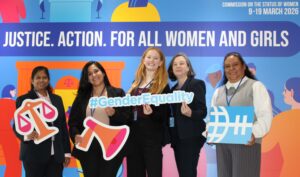
During the 70th session of the United Nations Commission on the Status of Women (CSW70), held in New York City from March 9-19, the Good Shepherd International Justice and Peace (GSIJP) team co-hosted “Ending Trafficking Together: Good Practices for Girls and Women,” a powerful panel on human‑trafficking prevention. The event underscored both the urgency and possibility of prevention by highlighting practical models and making meaningful connections to strengthen the work.
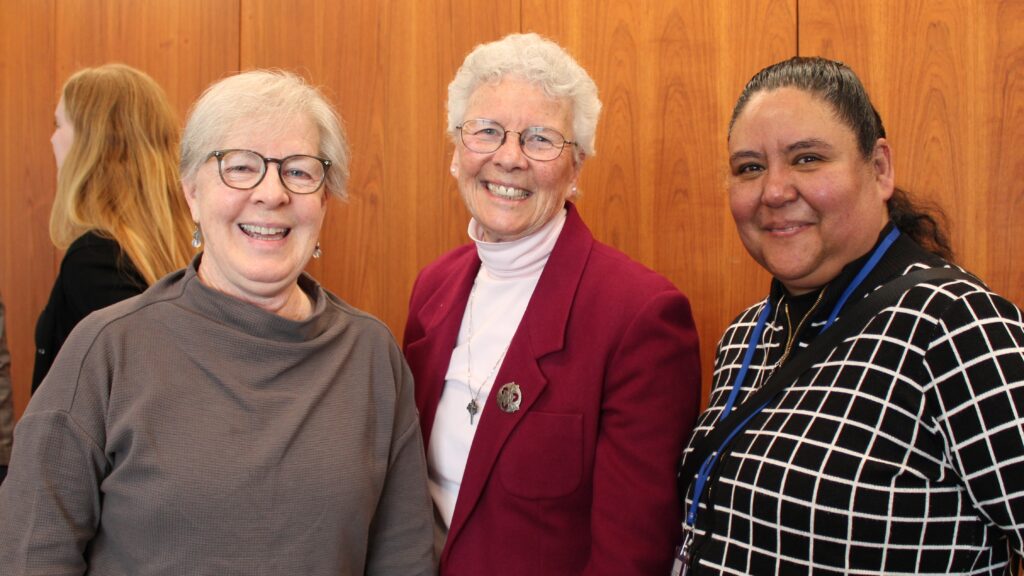
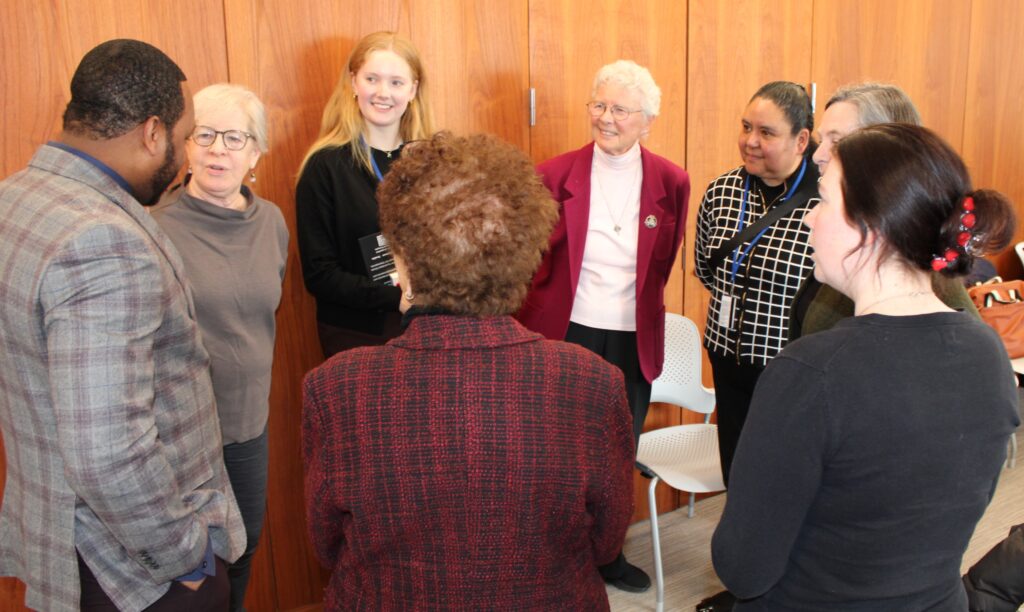
Numerous sisters and partners-in-mission from the U.S.|Toronto Region were in attendance, including Sœur Maureen McGowan, Regional Leader, and Sr. Martha Patricia Escobar of the Regional Leadership Team. Sr. Martha Patricia also accompanied the GSIJP team to other events during the 10-day commission.
Read about GSIJP’s experience at CSW70.
''I think this is very important, our presence here, because it seems that we are connected with the congregation, with justice, and with the Justice and Peace Office,” Sr. Martha Patricia says. “But also, it will open the doors to more sisters coming and support the advocacy that is done here.”
Global Partnerships Rooted in Grassroots Experience
The event was jointly organized by the Congregation of Our Lady of Charity of the Good Shepherd and the Institute of the Blessed Virgin Mary – Loreto Generalate, with the support of Misean Cara. These global partners shared commitment to women and girls is rooted in their grassroots experience.
Kimberly Happich Moloche, the Director of Advocacy for GSIJP, emphasized the significance of CSW70 and the Sisters of the Good Shepherd’s direct service to women and girls. “This year’s theme—access to justice and gender equality—directly aligns with the congregation’s long tradition of walking alongside women and girls experiencing violence, exploitation, and poverty,” Kimberly says. “We hold the expertise of the grassroots. We really do try to bring those voices to the United Nations.”
Panelists Share Community‑Driven and Policy‑Focused Solutions
The speakers and panelists brought together grassroots leaders, survivor advocates, and international partners to explore community-driven and survivor-centered strategies to end the trafficking of girls and women. Kimberly says the panel was focused on prevention and sharing good practices, what they’ve done, and what worked.
Aisling Nolan, of Soroptimist International for the Republic of Ireland, shared insights from a two‑year national awareness campaign designed to put the power of prevention directly into the hands of the public, making human trafficking a personal and recognizable issue within everyday communities.
Representing the Sisters of Loreto, Kenya was Sr. Jackline Mwongela CJ, head of the sisters’ anti-human trafficking project. She highlighted its comprehensive national model, which integrates prevention, protection, prosecution, and partnership to address trafficking in a coordinated and systemic way.
Adding an economic lens to the conversation, Chris Sagona, member of the NGO Committee to stop trafficking in Persons, focused on strategies for “interrupting the business of trafficking,” emphasizing the importance of dismantling the financial structures that allow exploitation to thrive.
Together, these panelists and other speakers underscored that effective responses must engage communities, strengthen systems, and directly challenge the economic incentives behind trafficking.
Survivor‑Centered Advocacy and a Call to Action
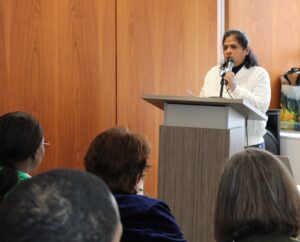 Panelist and GSIJP team member, Sœur Taskila Nicholas, brought the conversation to life by opening with powerful stories drawn from her own lived experiences in the field. Sr. Taskila serves as the Main Advocacy Director and NGO Representative to the U.N. in Geneva.
Watch Sr. Taskila tell two survivor stories.
With more than 25 years of experience in community development and prevention, she highlighted GSIJP’s survivor-centered approach. Their efforts focus on restoring economic dignity, empowering survivors to reclaim their lives, and strengthening long-term pathways to freedom.
Sr. Taskila emphasized that meaningful change also requires systemic action—advocating for comprehensive national action plans and effective public policies. As she powerfully noted, “Human trafficking will not end through declarations alone. It requires coordinated efforts and survivor-centered practices,” underscoring the urgency of moving from words to sustained, collective action.
From Local Action to Global Change
By highlighting practical models and cross-regional collaboration, the session inspired collective learning and strengthened the link between local action and global policy for justice and dignity. Through peer learning and shared exchange, participants demonstrated how collective knowledge strengthens coordinated action and builds more inclusive systems of justice and care.
Underscoring all of these efforts are the OLCGS core values. “Prevention is possible,” Sr. Taskila says. “It begins with dignity.”