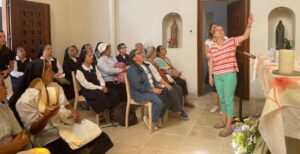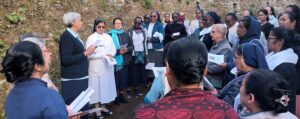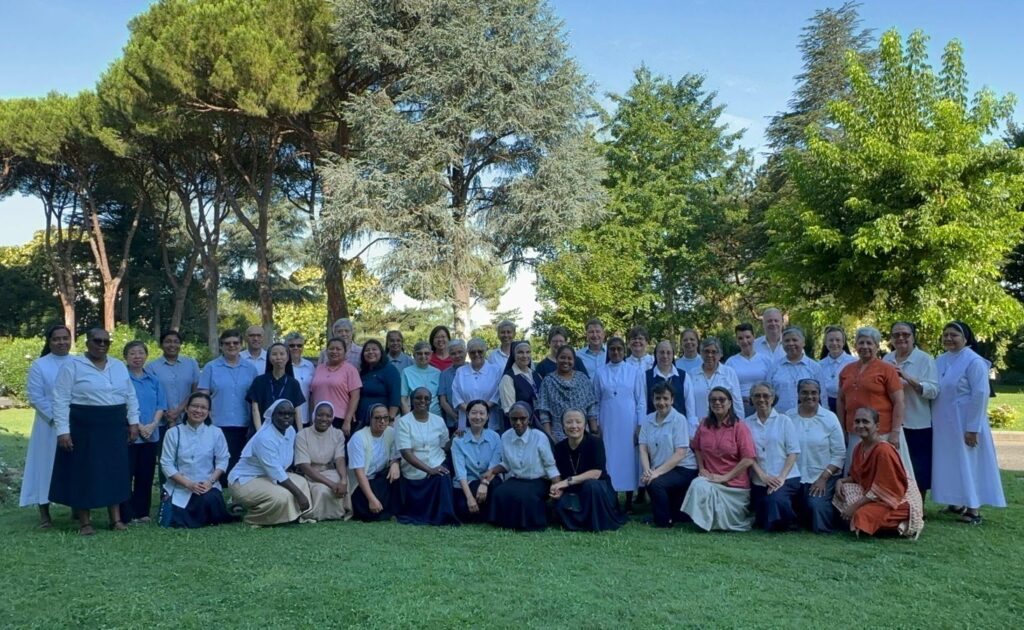
From July 6 to 10, 2026, 33 Unit Treasurers from across the Congregation gathered in Rome to reflect on the practical, strategic, and spiritual dimensions of financial stewardship within the Good Shepherd mission.
Organized by the Finance Office with the support of the de l’équipe de leadership de la Congrégation, the meeting addressed subjects including the spirituality of responsible stewardship, patrimony, sustainability, budgeting, policies and guidelines, short- and long-term planning for ministries, and the relationships connecting treasurers with Unit Leaders, communities, Mission Development Offices, and other Congregational structures.
Opening the gathering, la supérieure générale, Sœur Joan Marie Lopez thanked the treasurers for accepting “one of the quietest, yet one of the most influential ministries” in the Congregation. She reminded them that every budget, report, recommendation, and question “has the power either to open new possibilities for mission—or unintentionally limit them.»
«Behind every figure is a face. Behind every budget is a community. Behind every financial decision is someone waiting to experience dignity, healing, and hope,” Sr. Joan said. Calling participants to move from thinking in terms of “my Province” toward living as “one Congregation,” she invited them to replace the question, “What belongs to us?” with a more mission-centered one: “What does the mission need from us?»
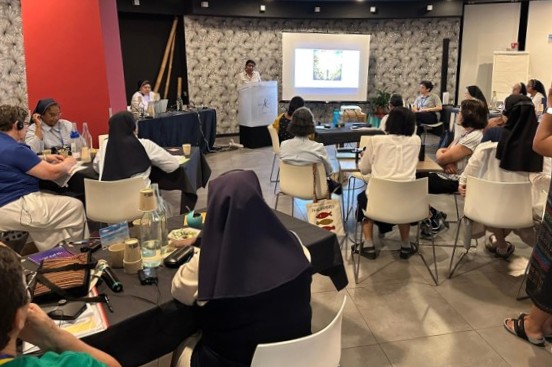
This understanding shaped the participatory approach of the meeting. Rather than simply listening to presentations from experts, the treasurers were invited to contribute their own knowledge and experience.
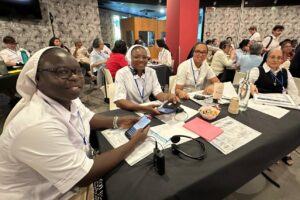
Sr. Lydicia Letlaka , du Afrique du Sud explained that this approach was initially unexpected. “We were the ones to do the work, coming from the realities of 33 treasurers», a-t-elle affirmé. «Placing our hopes and expectations on the table, sharing where we are as regions, exchanging knowledge, and bringing our challenges enabled us to harvest the fruits of our labor.»
Throughout the meeting, participants were encouraged to look beyond financial procedures and recognize the people and mission priorities represented by every budget, report, and decision.
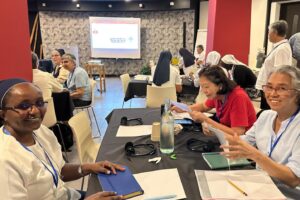 Sr. Marie Noel Wari , du Burkina Faso captured this understanding in a simple phrase that reflected the main message behind Congregational Leader Sr. Joan Marie Lopez’s welcome introduction: “Behind every figure there is a face.»
Participants reflected that Congregational resources are not possessions to be protected for their own sake, but gifts entrusted to them in service of the mission, the sisters and the people accompanied through Good Shepherd ministries. “We are stewards and not owners,” Sr. Marie Noel went on to say, adding that “contemplation transforms our financial responsibility into an act of love.»
This understanding places financial management firmly within the life and spirituality of the Congregation. Responsible stewardship requires technical competence, transparent systems and careful planning, but also discernment, collaboration and attentiveness to human dignity.
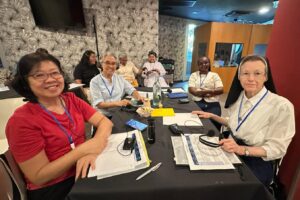 For Sr. Lydicia, the meeting reinforced the need for treasurers to be properly equipped to oversee Congregational assets and support ministries. It also acknowledged the isolation that can sometimes accompany the role. “Our realities were different; our mission is the same», a-t-elle déclaré.
Regionalization emerged as one of the most significant issues facing Unit Treasurers. Bringing Units together involves more than combining financial statements or developing shared budgets. It also requires trust, openness and an understanding of different cultures, histories and economic circumstances.
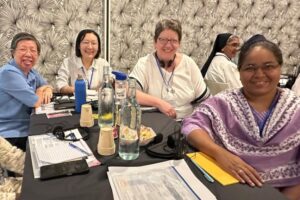
Sr. Mary Carol McClenon , de la United States noted that money can be difficult to discuss, particularly when Units have very different resources and needs. Spending time together in Rome helped participants build the relationships needed to speak more openly about income, expenditure, local realities and the development of future regional budgets.
«A common challenge among treasurers is building trust toward regionalization», a-t-elle affirmé. «Spending time together has helped sisters develop relationships and context to promote sharing about Province cultures, special circumstances, income, expenses and questions about how to build a combined Region budget.»
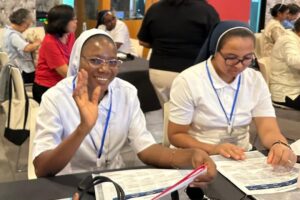
Participants recognized that financial regionalization cannot be treated solely as an administrative process. It must be supported by dialogue, mutual understanding and respect for the realities of each Unit. Treasurers are therefore being invited to think beyond local and national boundaries and consider how resources can be managed collaboratively to have a greater impact on the mission.
The meeting also explored the relationships between Unit Treasurers, Mission Development Offices and the Good Shepherd International Foundation. Exchanges with GSIF staff opened the way for further conversations about how these structures can collaborate more effectively.
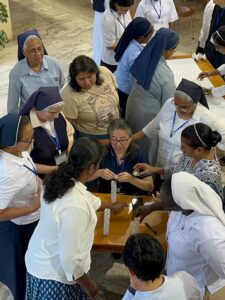 The testimonies emphasized that the commitments made in Rome should not remain only on paper. Sr. Imelda Hernandez , du Mexique proposed developing a lasting global network of treasurers, creating a “fabric of co-responsibility, mutual learning, and emotional and technical support.»
Suggested initiatives included a virtual community of practice where approved policies, guidelines, budget templates, and accountability resources could be shared. Participants also proposed brief meetings every six months—not simply to review figures, but to exchange good practices and discuss everyday challenges.
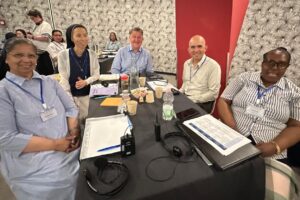 Another proposal was to identify lay professionals and consultants who already support different Units and who could provide specialized assistance in areas such as audits, compliance and risk management. A coordinating committee could serve as a bridge with the General Treasurer, gather formation needs, and support more consistent implementation of Congregational financial policies.
While the meeting addressed complex organizational and financial questions, its most important outcome may have been the relationships that were created and strengthened.
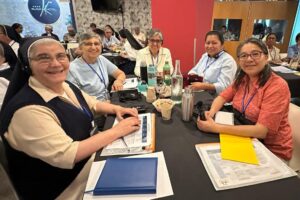 «Slowly, we started to connect, and you could hear our voices loudly in the small conference room,” Sr. Lydicia recalled. By the end, participants felt “happy, fulfilled and ready to echo back to our regions” what they had learned.
Sr. Mary Carol expressed a similar conviction: “Probably the most significant fruit of this Treasurers’ meeting has been a sense of solidarity amongst the sisters.»
That solidarity provides a strong foundation for the work ahead. The Rome meeting demonstrated that financial stewardship within the Congregation is ultimately about more than numbers. It is about trust, relationships and the responsible use of shared resources in service of the Good Shepherd mission.
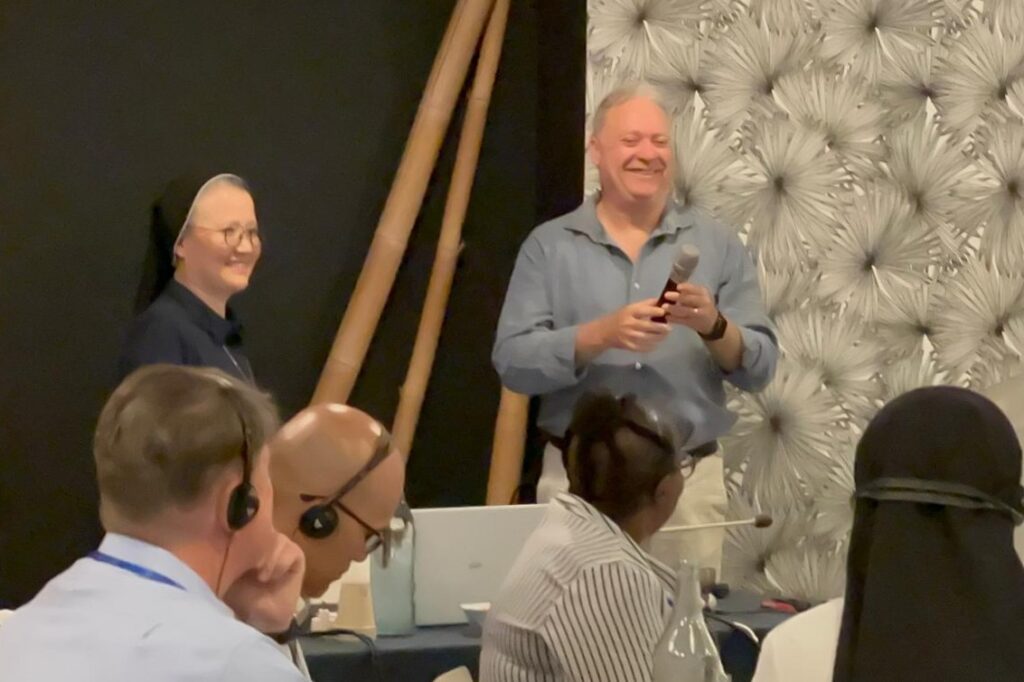
At the end of the sessions, Congegational Accountant & Finance Controller Massimiliano Viatore, spoke of how “The opportunity to meet in person and to weave together such different knowledge and experience proved especially valuable: it fostered the integration of those taking their first steps, with little administrative expertise, and those with long experience who manage significant patrimonies. Everyone felt useful and involved; each person learned something and, at the same time, had something to teach. »