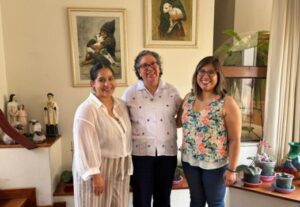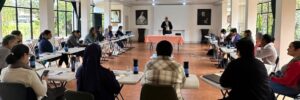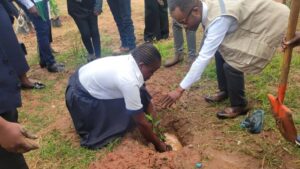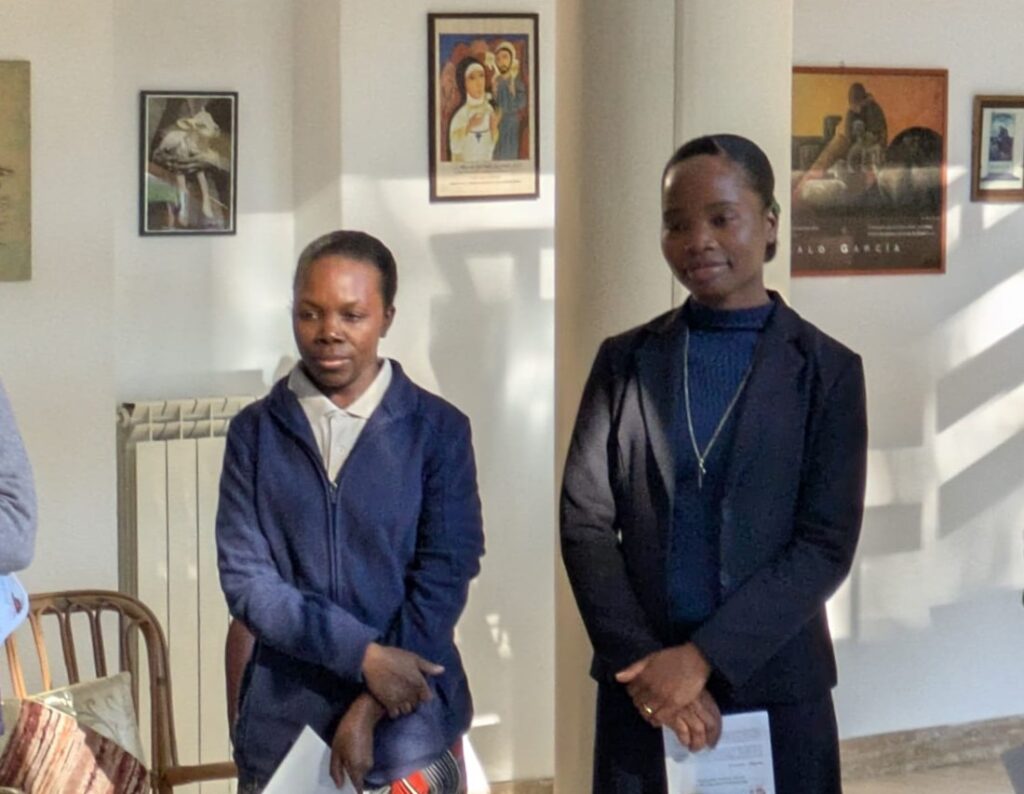
Sister Donana Xavier from Angola and Sister Emilia Daniel Martins from Mozambique spent nine months immersed in the international community of the Generalate in Rome, undertaking an intensive internship with the Good Shepherd International Foundation (GSIF). Designed to strengthen Mission Development capacity in their home countries, the internship combined technical training with personal and relational growth, fostering collaboration with the GSIF team and partners across regions while encouraging meaningful intercultural exchange. As they returned to their home countries towards the end of 2025, the Communications Office interviewed the sisters on their experience and hopes for the future.
What ministries are carried out in your country?
DX. The Good Shepherd mission in Angola is deeply rooted in accompanying vulnerable people, especially women, children, and young people, through education, health, social promotion, and pastoral care. Our mission responds to concrete realities such as poverty, limited access to quality education and healthcare, unemployment, and social inequality.
Through schools, community programs, and pastoral initiatives, we seek to promote human dignity, integral development, and hope, always inspired by the Gospel and the charism of St. Mary Euphrasia and St. John Eudes. The mission is carried out in close collaboration with local communities, partners-in-mission, and program participants, responding to the most urgent needs of the people.
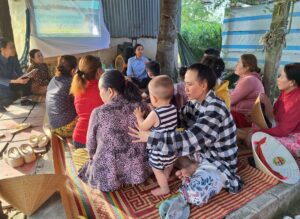
EM. In Mozambique, we work with vulnerable communities, especially women and girls. The mission focuses on protection, empowerment, and improving living conditions. Women and girls are supported to be safe, to gain skills, and to earn a living. This work is supported by GSIF, which promotes dignity, justice, and care for vulnerable people.
What did you hope to achieve from your internship with GSIF?
DX. I sought to do an internship with GSIF because of my deep desire to strengthen my capacity in project management, fundraising, and international cooperation in service of the mission.
I was hopeful that the experience would help me better understand how international solidarity operates within the Congregation and how resources are mobilized to respond effectively to mission needs. I also hoped to grow professionally and spiritually, gaining skills that could be directly applied to support sustainable projects in Angola and across Africa.
EM. I wanted to learn from an international organization that works for social justice, gaining new skills that I could use in the service of vulnerable people in Mozambique, such as project planning, teamwork, and resource mobilization. I also hoped to grow personally and spiritually by living and working in a new culture.
What challenges did you face in adapting to a new cultural environment?
DX. Adapting to life and work in Italy presented challenges such as language barriers, different ways of communication, work rhythms, and cultural expressions. At times, this required patience, openness, and humility.
However, these challenges became opportunities for growth, helping me to develop greater flexibility, intercultural sensitivity, and deeper trust in God. Spiritually, the experience strengthened my sense of the universality of the Congregation and helped me appreciate diversity as a gift that enriches mission and community life.
EM. One challenge was the language and the different ways of communicating. At first, it was not easy to understand everything. This taught me patience and how to be an active listener. Another challenge was adapting to a different work style and daily routine, which taught me flexibility and openness. Being far from my country and community was also difficult. These challenges helped me become stronger, more open, and more trusting in God.
What memories stand out for you?
DX. One of the most meaningful experiences was working closely with sisters and partners-in-mission who are deeply committed to justice, solidarity, and the Good Shepherd mission. The spirit of collaboration, mutual respect, and shared responsibility was very enriching.
Encounters with people from different countries and cultures helped me to see the mission from a global perspective and reinforced the importance of working together as one body, united by the same charism and mission.
EM. Some of the most meaningful experiences were working with sisters and partners-in-mission from around the world. I learned a lot from meetings, trainings, and shared reflections. Planning projects together showed me the importance of collaboration and participation. Spiritual conversations with sisters strengthened my faith and motivation.
What new skills will you put to use in your future ministries?
DX. The internship significantly contributed to my professional formation by equipping me with practical skills in project writing, monitoring, reporting, and understanding donor requirements. It helped me to see the importance of planning, accountability, and transparency in our mission work.
These skills are essential for strengthening mission capacity in Angola, enabling us to present well-structured projects and to respond more effectively to the needs of vulnerable populations.
EM. The internship helped me develop skills in project management, communication, and teamwork. I learned how to plan activities with communities and how to support them better. These skills are very useful for the mission in Mozambique and will help us to achieve better outcomes in our work.
How do you envision the Good Shepherd mission, and what are your hopes for the future?
DX. This experience has broadened my vision for the future of the mission by helping me to think more strategically and sustainably. It highlighted the importance of integrating local realities with global support and partnerships.
The most pressing needs I hope to address include access to quality education, healthcare, and vocational training, as well as the empowerment of women and young people. Strengthening local capacities and creating sustainable projects are essential priorities for the future of the mission.
Personally, I hope to continue growing in commitment, competence, and availability to serve wherever the mission calls. I trust that, guided by the Spirit, our shared efforts will contribute to transforming lives and building a more just and dignified society.
EM. This experience helped me develop a wider vision for the mission – one in which women and girls are more empowered and involved in leadership. I want to use what I learned to support vulnerable communities and to work with others to build a more just and caring society. The most urgent needs are economic opportunities for women, protection for vulnerable people, and strong community support. My hope is to continue serving the mission with commitment and compassion.
Learn more about Good Shepherd International Foundation here