By Sr. Precilla Noronah, Asia Pacific Working Party Member, India
In today’s rapidly changing world, listening to girls’ voices is more important than ever. Girls are not merely recipients of care, protection, or development programs. They are individuals with ideas, experiences, dreams, concerns, and the capacity to contribute meaningfully to the decisions that affect their lives and communities.
Creating Safe Spaces to Speak
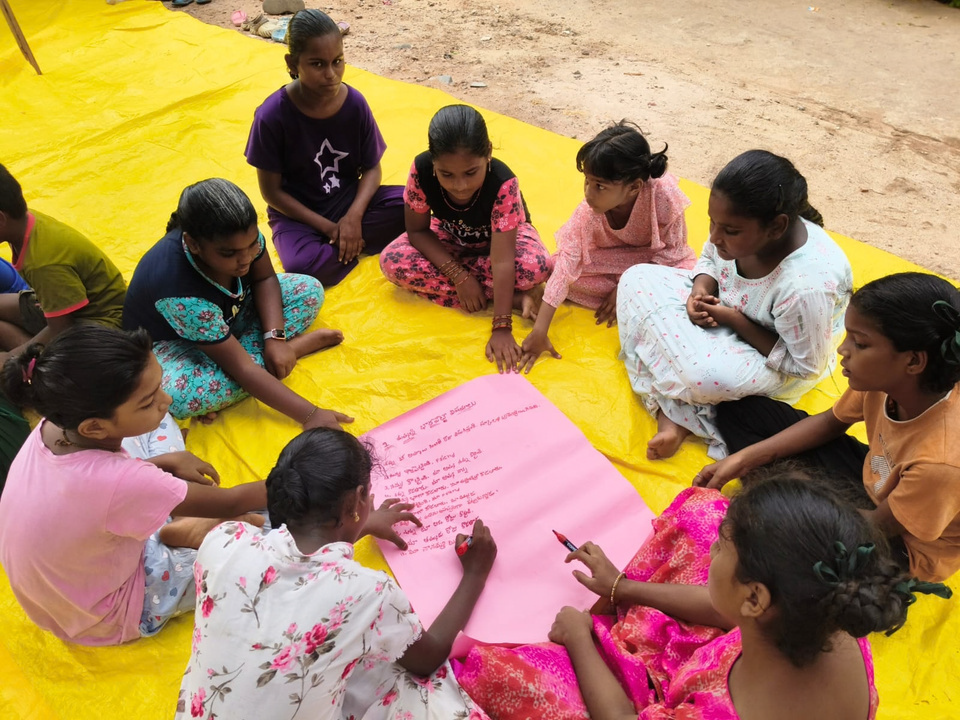
A person can only truly express herself when she feels safe. Families, schools, communities, workplaces, religious institutions, and organizations all have a responsibility to create spaces where every person can speak without fear of punishment, humiliation, discrimination, or retaliation.
A safe space is not only a physical place. It is also an environment of trust, respect, confidentiality, and acceptance. Girls should know that their concerns will be taken seriously and that speaking about something difficult will not result in blame being placed upon them.
Listening Beyond Words
Sometimes girls do not have the words, confidence, or opportunity to explain what they are experiencing. Silence, withdrawal, changes in behavior, hesitation, fear, or a sudden lack of participation may communicate something that words cannot. At the same time, adults must avoid making assumptions. Noticing a change invites us to listen more carefully, not to interpret a girl’s experience without her participation.
The question should move from “What do adults think is best for girls?” to “What are girls telling us about what they need, what they experience, and what they hope for?"
Recognizing That Every Girl’s Experience Is Different
There is no single experience of being a girl. Girls may face different realities depending on poverty, disability, geographical location, family circumstances, social and cultural background, access to education, and other forms of inequality. Some girls may have opportunities to speak easily, while others may remain unheard.
Listening in the Digital Age
For today’s generation, an important part of girls’ lives takes place in digital spaces. Girls use technology to learn, communicate, build friendships, express opinions, and participate in public conversations. Listening to girls today therefore means understanding both their online opportunities and their online experiences. Adults and institutions need to create spaces where girls can speak openly about what happens online and receive support without being blamed for the harm they experience.
From Listening to Action
Perhaps the most important aspect of listening is what happens afterwards. If girls repeatedly share the same concerns but nothing changes, they may eventually stop speaking. Listening without action can create frustration and mistrust.
Meaningful listening asks:
What have we heard?
What have we learned?
What needs to change?
How can girls be involved in that change?
The challenge is whether we are ready to hear them, whether we are willing to take them seriously, and whether we will act on what we hear.
Let us therefore create spaces where every girl can say what she thinks, share what she experiences, express what she hopes for, and participate in decisions that affect her life.
Listen to her. Believe her. Protect her. Walk with her.
And, most importantly, create opportunities for her voice to become part of the change she wants to see.
This article is taken from the October 2026 edition of Safe Spaces, the Good Shepherd India Nepal Region’s newsletter, published to mark the International Day of the Girl Child under the theme “Voices of Change: Invest in Girls’ Rights.” Its first student-led editorial collaboration brings together young people’s reflections, stories, and artwork, highlighting the need for spaces where girls can speak freely, be heard, and help shape the decisions that affect their lives. Download the newsletter (in English only) here.