À l’occasion de la Journée internationale de prière et de sensibilisation contre la Traite des êtres humains, Sheila Pires, de la Conférence des évêques catholiques d’Afrique australe, s’est entretenue avec sœur Zelna Oosthuizen, de la Congrégation Notre Dame de Charité du Bon Pasteur. En tant que présidente de la Conférence des responsables de la vie consacrée en Afrique australe, elle est au cœur du combat de l’Église contre la Traite des êtres humains dans la région.
Depuis près de vingt ans, les religieuses catholiques d’Afrique australe, discrètement mais avec détermination, ont bâti un solide réseau de foi, de résistance et d’espérance dans la lutte contre la Traite des êtres humains.
Ce qui avait commencé en 2007 par un simple atelier au Cap a rapidement marqué un tournant. Confrontées à la réalité grandissante de la Traite dans leurs communautés, les religieuses ont compris qu’elles ne pouvaient plus se taire. Dès 2008, leur engagement s’est concrétisé par la création de SARWATIP –Religieuses sud-africaines contre la Traite des personnes. Ce fut une réponse collective née de la compassion, de la proximité avec la souffrance et d'une conviction partagée : l'Église ne pouvait rester à l'écart de cette crise.
Au fil des ans, le mouvement a évolué. En 2014, l'initiative est devenue Lutte contre la Traite des personnes (LTTP), renforçant la coordination et élargissant la collaboration. À l'échelle mondiale, la création de Talitha Kum sous l'égide de l'Union internationale des supérieures générales (UISG) a donné une nouvelle structure et une dimension internationale aux efforts locaux. Pour les religieuses d'Afrique australe, ce réseau international est devenu une bouée de sauvetage, un espace de formation, de solidarité et de mission partagée.
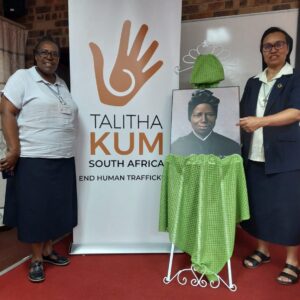 En 2022, Talitha Kum Afrique du Sud a été officiellement créée, marquant une nouvelle étape dans la réponse organisée de l'Église à la Traite des personnes. Bien que jeune, le réseau bénéficie d'un riche héritage d'engagement et d'expérience.
S'adressant au Bureau de communication de la SACBC, Sœur Zelna Oosthuizen RGS, présidente de la Conférence des responsables de la vie consacrée en Afrique australe (PCRVCAA) et membre de la Congrégation de Notre-Dame de Charité du Bon Pasteur, est revenue sur ce parcours.
«L'engagement des religieuses dans la lutte contre la Traite des êtres humains a débuté en 2007,'' a-t-elle déclaré. ''En 2008, un groupe de religieuses s'est mobilisé pour affirmer la nécessité d'agir concrètement.»
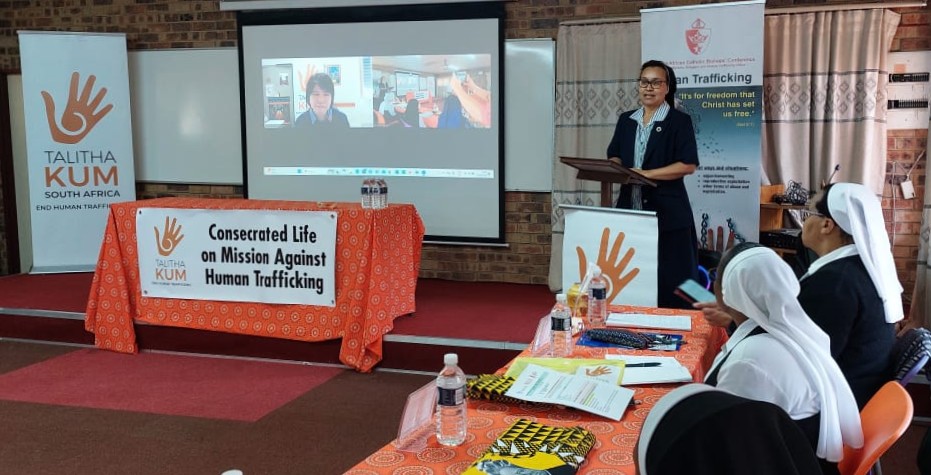
Aujourd'hui, cet ''algo'' engagement s'est traduit par une mission structurée, guidée par la foi. Grâce à Talitha Kum, des sœurs de toute l'Afrique australe sont formées, dotées de compétences et habilitées à lutter plus efficacement contre la Traite sous toutes ses formes. Les ateliers de formation pour les formateurs et les responsables constituent désormais un élément essentiel de cette mission, non seulement pour diffuser l'information, mais aussi pour former des témoins.
«Nous devons également donner aux jeunes les moyens d'agir… pour qu'ils aillent sur le terrain et soient des témoins d'espérance,'' a ajouté Sœur Oosthuizen.
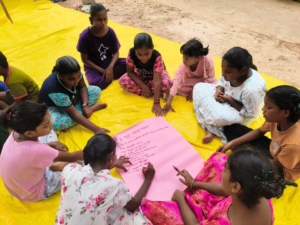
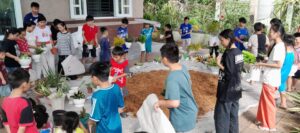
La formation dispensée lors d’ateliers ne se limite pas aux salles de conférence. Les sœurs portent leur mission dans les écoles, les paroisses et les communautés locales, sensibilisant le public aux réalités de la Traite des êtres humains, apprenant à en reconnaître les signes et aidant les communautés à comprendre comment la vulnérabilité est exploitée.
Des cours de catéchisme aux réunions paroissiales, des groupes de jeunes aux forums de femmes, le message est transmis avec douceur mais fermeté : la Traite est une réalité, elle est proche et il faut la combattre.
Enracinées dans leur proximité avec les populations, les religieuses agissent au plus près des gens : elles écoutent, accompagnent, protègent et éduquent.
«En tant que religieuses, nous sommes sur le terrain, proches des gens,'' a déclaré Sœur Oosthuizen. ''Nous devons écouter leurs voix et trouver des moyens de collaborer avec d’autres pour faire une différence dans leur vie, car nous sommes les plus proches, nous sommes au plus près d’eux. »
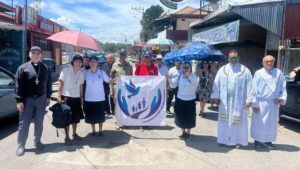
Aujourd’hui, des sœurs d’Afrique du Sud, du Botswana, d’Eswatini et du Lesotho sont unies dans cette mission, unies par la foi et une responsabilité partagée. Leur présence dans les espaces régionaux et interreligieux, notamment lors des forums liés au G20, témoigne d'une prise de conscience croissante : la Traite des êtres humains n'est pas seulement une crise sociale, mais aussi une plaie morale et spirituelle au sein de la société.
À travers Talitha Kum, l'Église en Afrique australe continue de tisser un réseau de foi, de formation et d'action – un atelier après l'autre, une visite scolaire après l'autre, une rencontre paroissiale après l'autre.
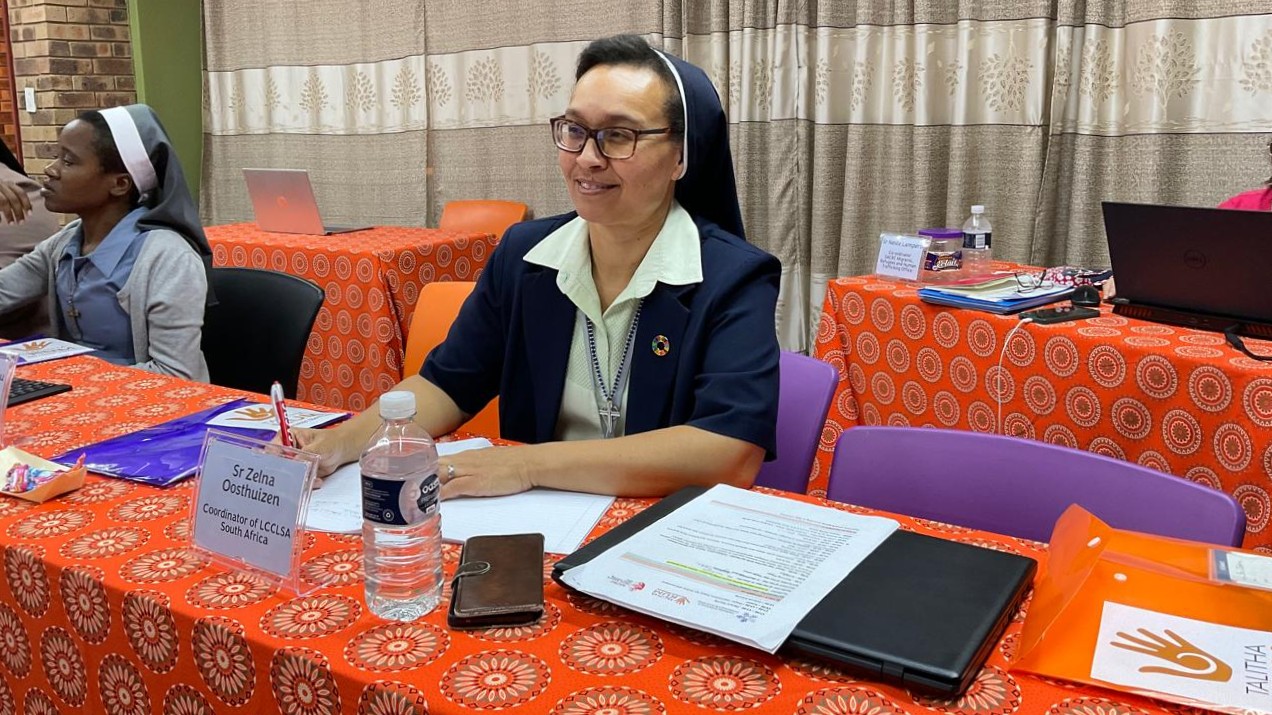
C'est un combat discret, souvent invisible, mais profondément enraciné dans l'Évangile : des religieuses se tiennent aux côtés des plus vulnérables, bâtissent des structures de protection et deviennent, comme le décrit Sœur Oosthuizen, ''un témoin d'espérance'' pour les femmes, les hommes, les filles et les garçons de notre époque.
Dans une région marquée par les migrations, la pauvreté et les inégalités, leur mission résonne avec une clarté prophétique : lutter contre la Traite des êtres humains n'est pas seulement un devoir social, c'est une vocation sacrée.
Cet article a été initialement publié par la SACBC (accessible ici) et traduit et republié ici avec leur aimable autorisation.