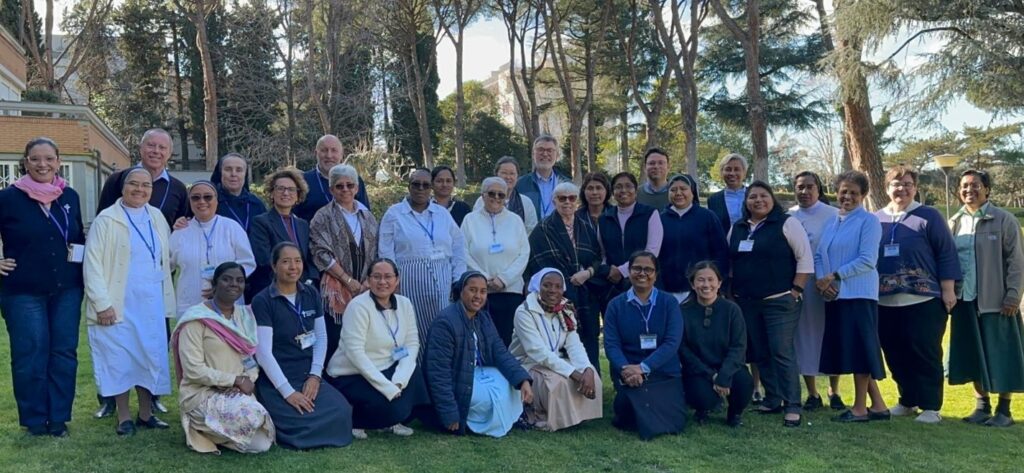
Following the recent safeguarding conference held in February, 2026, at the OLCGS Generalate in Rome, Sr. Niluka Perera, took time out of her busy schedule serving as Congregational Safeguarding Delegate, Coordinator of Catholic Care for Children International at UISG, and member of the Pontifical Commission for the Protection of Minors to speak with the Communications Office about her work to build a sustainable culture of safeguarding across the Good Shepherd mission.
As a professional social worker, I have always felt deeply connected to the mission of the Good Shepherd, particularly in its commitment to children and people in vulnerable situations. This alignment between my professional vocation and the charism of the Congregation naturally led me to engage more actively in safeguarding and justice and peace initiatives.
I initially served as the Good Shepherd Justice and Peace Contact Person in my country. Later, I became a member and eventually the coordinator of the Good Shepherd Justice and Peace Network for Asia Pacific. These roles helped me develop a broader understanding of systemic injustice, advocacy, and the importance of structured safeguarding mechanisms within ministries.
With the support of Clare Nolan, the Good Shepherd International Justice and Peace Representative to the UN, we developed the Child Safeguarding Policy for my province of Sri Lanka and Pakistan. As this was the first policy of its kind in the province, there was initially limited understanding of safeguarding concepts and practices. It took time for the province to fully absorb, accept, and integrate the policy into its ministries.
This journey deepened my awareness that safeguarding is not merely about having a policy in place; it is about fostering a culture of accountability, courage, transparency, and commitment. My background in social work equipped me with the skills to deliver training on prevention and to support the creation of a safeguarding culture grounded in respect, dignity, and protection for all, especially those in vulnerable situations.
As I strongly advocated for every child’s right to grow up in a family environment, I worked to promote family- and community-based alternatives for children in need of care and protection, rather than institutional care. Through this commitment, I was invited by my congregation in 2020 to coordinate a project at the Union of International Superiors General (UISG) called Catholic Care for Children International.
Later, in 2022, Pope Francis appointed me as a member of the Pontifical Commission for the Protection of Minors. This appointment is both a privilege and a profound responsibility — an opportunity to serve the global Church by strengthening safeguarding policies, practices, and accountability across diverse contexts.
Being entrusted by our congregation to serve as the Congregational Safeguarding Delegate from April 2025 is, in many ways, a micro-level responsibility within the larger global Church safeguarding system. It is an opportunity to connect the macro vision of the Church and the congregation with the lived realities at the local level.
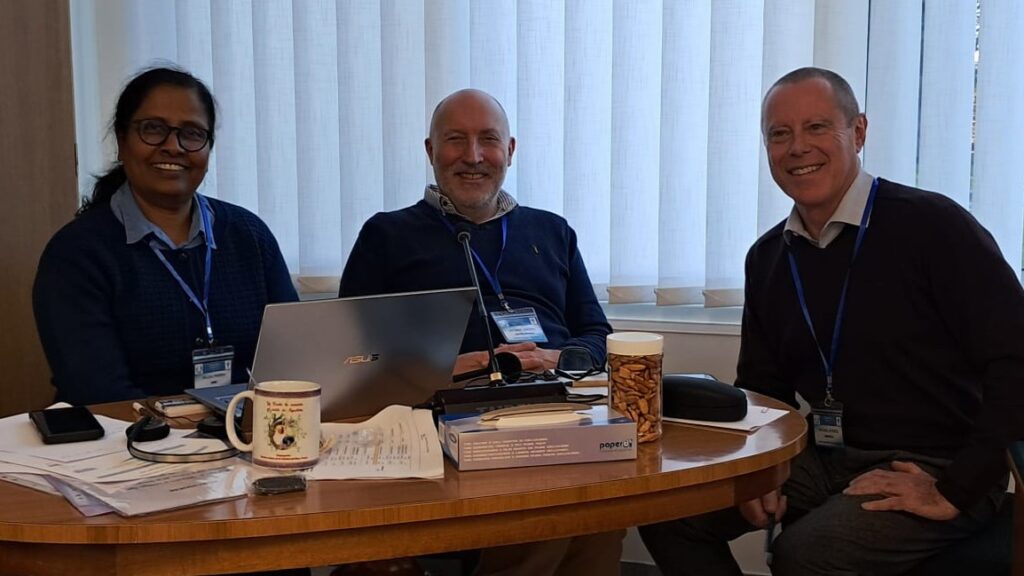
This role calls me to bridge policy and practice — ensuring that international church safeguarding standards are meaningfully translated into congregational safeguarding frameworks, and that sustainable structures are built within the congregation to strengthen safeguarding governance. It also means empowering local leadership to become resourceful, accountable, and functional in their safeguarding governance responsibilities.
Safeguarding is everyone’s responsibility. In a large congregation, a centralized approach alone is not sufficient. One of the main priorities of the Congregational Safeguarding Team is to develop sustainable structures at the local level, ensuring that safeguarding becomes embedded in all ministries. As a congregation, we are transitioning governance from province-level structures to regional structures. Therefore, safeguarding must also align with these emerging regional structures.
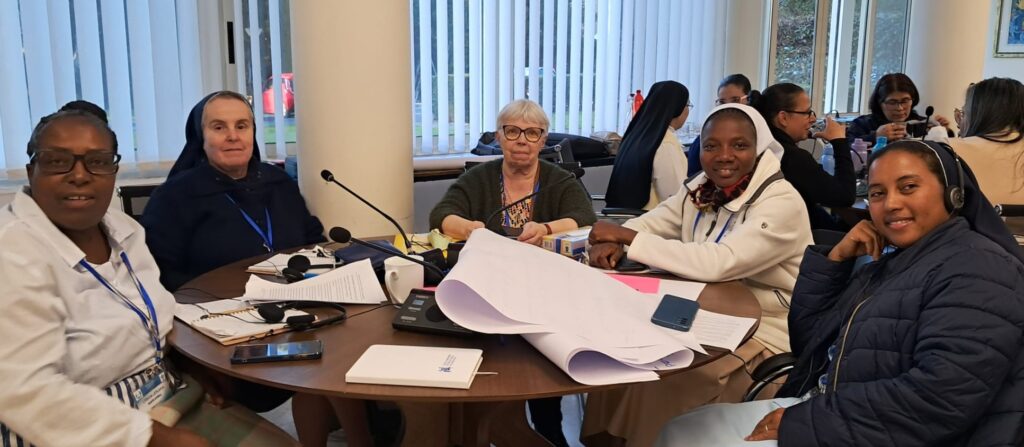
The recent safeguarding conference, held from February 16 to 19, 2026, at the Generalate in Rome, brought together delegates from six circles of the congregation. The conference was guided by the principles of subsidiarity, solidarity, and synodality. It focused on carefully listening to local realities, contexts, successes, challenges, and opportunities.
The conference paved the way for establishing two main groups: the delegates representing the circles became the Safeguarding Reference Group (SRG), and together they nominated a representative from each circle to form the Safeguarding Working Party (SWP). The Safeguarding Working Party, comprised of one representative from each circle along with the GSIF representative, the Governance Officer, the Congregational Safeguarding Training Coordinator, and the Congregational Safeguarding Delegate, will meet twice this year in addition to regular online meetings.
The Safeguarding Reference Group (SRG) is a larger body comprised of representatives from the regions of the congregation. It provides broad consultative input and regional perspectives to the Safeguarding Team. In contrast, the Safeguarding Working Party (SWP) is a smaller, time-limited group responsible for structured design work and the development of governance proposals.
The SWP will operate from 2026 to 2027, with an annual review of its progress. By the end of its term, it will submit to the CLT a proposed structure, Terms of Reference, and a membership model for the permanent International Safeguarding Committee (ISC).
Future meetings, both online and in person, will be scheduled to initiate and advance this work.
Safeguarding begins with commitment, grows through collaboration, and becomes a culture when everyone takes responsibility.