Edited from a report by Sr. Donatus Lili, Kenya (Province of Eastern Central Africa)
In March 2026, the Eastern Central Africa Province (ECAP) implemented coordinated advocacy and empowerment initiatives across Uganda, Kenya, and the Democratic Republic of Congo to advance the rights of women and girls, in line with the International Women’s Day theme, “Rights, Justice for All Women and Girls,” and the Sustainable Development Goals.
Reaching over 2,300 participants, the programs focused on the prevention of gender-based violence, access to justice, education, health, environmental sustainability, and economic empowerment. Key achievements included increased awareness of human rights, strengthened community engagement, enhanced vocational skills, and improved livelihood opportunities. Overall, the initiatives reinforced women’s role as agents of change and promoted inclusive, equitable, and sustainable development.
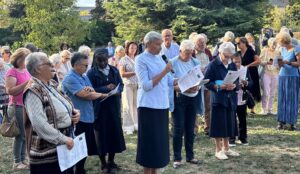
In Uganda, the Justice and Peace Kampala Community commemorated International Women’s Day on March 8 by gathering 158 women from different groups for a day of prayer, dialogue, learning, and solidarity.
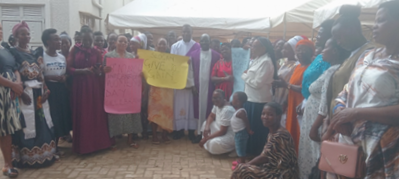
The gathering created an inclusive space where women could reflect on their dignity, their rights, and their role in building peaceful and just communities. Participants deepened their understanding of fundamental human rights, gender equality, social inclusion, and access to justice. The sessions also encouraged women to more actively claim their rights and to strengthen their role in peacebuilding and conflict prevention. In this way, spiritual accompaniment and civic empowerment were woven together, helping participants to see themselves not only as beneficiaries of support but as advocates for justice and peace.
The activity contributed to the implementation of the Sustainable Development Goals by promoting gender equality, peace, education, well-being, and inclusive development, in line with the global commitment to “leave no one behind.”
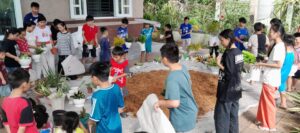
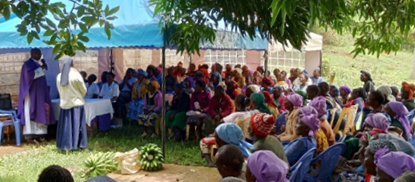
In Kenya, the Good Shepherd Sisters’ program in Mikinduri, Meru County, used International Women’s Day as a strategic platform for advocacy and community engagement. The local initiative focused especially on the growing challenge of gender-based violence, which continues to be a serious barrier to the rights, safety, and well-being of women and girls. Through community-based accompaniment and targeted awareness-raising activities, participants were encouraged to recognize harmful social norms, understand available protection mechanisms, and take collective action to prevent and respond to violence.
This work reflects our Good Shepherd commitment to stand with women and girls where dignity is threatened. In Meru County, advocacy was not limited to information-sharing; it was rooted in the patient work of forming resilient, informed, and gender-responsive communities. By engaging women, girls, and men through organized community structures, the program helped strengthen awareness of rights and responsibilities while encouraging local participation in the elimination of violence and discrimination.
The transformative reach of the ECAP mission was especially visible in the Democratic Republic of Congo through the Bon Pasteur Program in Kolwezi and Katebi. On March 9, Sr. Bernadette Tapsoba participated in a high-level event in Joli City, held under the leadership of Fifi Masuka, which brought together more than 2,000 women and key stakeholders. The event promoted dialogue and advocacy on challenges affecting women and girls, including gender-based violence, early and forced marriages, and limited access to basic social services.
Further events in Katebi and Kolwezi broadened the conversation, linking women’s rights with public service, professional ethics, health, education, environmental responsibility, and economic empowerment. Speakers emphasized that women are not only mothers or wives, but key contributors to the socio-economic development of their communities.
Discussions addressed excellence, integrity, respect, and accountability in public life, while also highlighting the need to support girls’ education, confront stereotypes, and improve health awareness, including sensitization on cervical cancer, obstetric fistula, early and forced marriage, vaccination, and community health education.
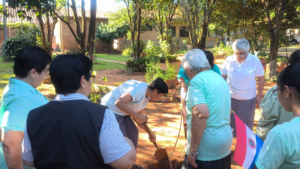
One significant intervention raised by Sr. Donatus Lili connected women’s well-being with environmental sustainability and public health. She highlighted the effects of deforestation and widespread charcoal use in the DRC, including carbon emissions and respiratory illness, and called attention to the need for a transition to cleaner energy. This exchange placed women at the center of an integrated approach to health, environment, and sustainable development.
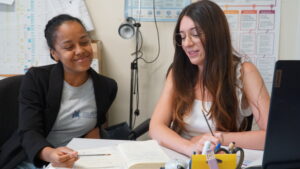
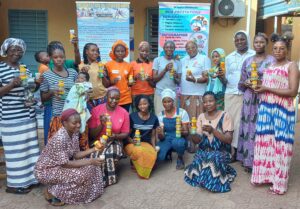
The Bon Pasteur Program also demonstrated real progress made in women’s economic empowerment. Through formal and informal education, literacy, computer training, vocational initiatives, health services through Afya Bora Clinic, and referral partnerships, women and girls were guided toward greater autonomy.
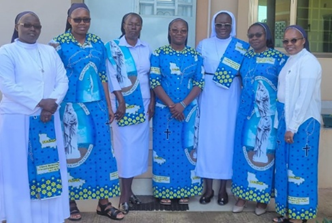
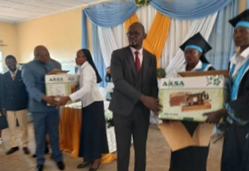
At Kanina Grounds on March 25, participants celebrated progress made through the USUMADA and MAHUWA Projects. Beneficiaries from six project sites reported increased financial autonomy through dressmaking and vocational training, providing safer and more sustainable alternatives to high-risk livelihoods such as artisanal mining. Trainees from four centers completed dressmaking courses, received certificates from the Department of Social Affairs, and were each given a sewing machine to support their transition into self-employment and income generation.
Together, these International Women’s Day initiatives show the Good Shepherd mission in action across ECAP: listening to women’s realities, confronting injustice, strengthening protection, and creating practical pathways toward dignity and independence. From Kampala to Mikinduri, from Kolwezi to Kanina, the message was clear: women and girls must not be left at the margins of development, justice, or decision-making. They are already shaping their communities with courage, resilience, and hope.
Download the full report (in English) here.
Discover more about the Good Shepherd mission in Eastern Central Africa here.