Por Buen Pastor Justicia y Paz Internacional
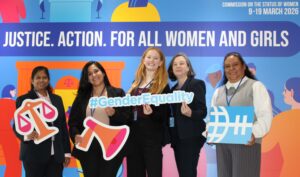
En el 70th session of the Commission on the Status of Women (CSW70), held from March 9 – 19, 2026, in New York, girls were not only present in conversations on justice, but they also helped shape them. Through advocacy, public speaking, mission visits, and direct engagement with decision-makers, Good Shepherd girl advocates brought lived experience and clear calls for accountability into global spaces.
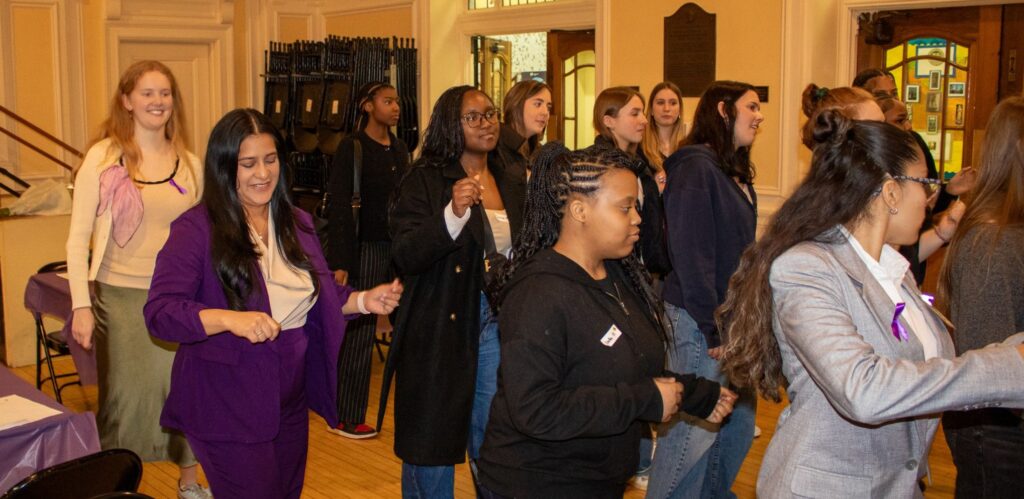
 This was powerfully reflected in the Grupo de Trabajo sobre Niñas event, Girls Lead Justice: Beyond the Commitments. As Chair of the Working Group on Girls, GSIJP Main NGO Representative Kimberly Happich Moloche helped convene a space where girls were not symbolic participants, but advocates, moderators, and leaders.
The message was clear: girls are not waiting to lead in the future – they are leading now.
For Sugandha, a 17-year-old Good Shepherd girl advocate from India, CSW70 became something more. In her words, it was “a continuous dialogue between the ground and the global stage.” Her experience revealed how closely connected these spaces are. In her engagement with the UN Mission of Romania, discussions on femicide legislation and trauma-informed justice highlighted a critical reality: justice begins at the first point of contact, and systems must be equipped to respond with sensitivity and understanding.
Drawing from her experience with Good Shepherd, she noted that when trauma is not handled with care, it can silence girls further. Hearing policymakers acknowledge the need for mental health-responsive systems pointed to the importance of bridging policy and lived reality.
Across her engagements, one truth remained: girls are still too often spoken for, rather than spoken with. As Sugandha reflected, “advocacy is not just about raising issues, but about carrying voices across spaces that don’t always intersect».
This call for meaningful participation was echoed by Good Shepherd girls from Bolivia. Marylin, Angela, and Camila brought forward questions shaped by their lived realities, asking why inequality persists if justice means equality, how youth participation can move beyond symbolism to real influence, and how delays in justice systems continue to harm survivors.
These were not abstract reflections, but grounded interventions. Together, their voices made something clear: girls are not on the margins of these conversations. They are engaging directly with the systems that affect their lives, asking sharper questions, and demanding stronger responses.
CSW70 reinforced a central lesson for Good Shepherd’s advocacy. Girls do not lack leadership, insight, or solutions. What they are too often denied is access. However, when access is created, girls do not simply participate; they lead.
At CSW70, Good Shepherd girls did exactly that, bringing their voices, realities, and leadership into the spaces where decisions are made.