By Sr Antoinette Assaf, Mission Development Office Director, Lebanon (Province of Lebanon/Syria)
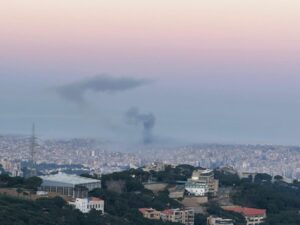
For the fourth week, Lebanon continues to be devastated by an immense human and material toll, as an intensive campaign of daily bombardments and airstrikes targets the South, the Bekaa Valley, the dense heart of Beirut, and other parts of the country. More than a thousand people have been killed and thousands more wounded, while over 1.2 million people have been forced to flee their homes in one of the fastest displacement crises in the country’s history.
This physical destruction is mirrored by a double darkness: an external one, where chronic power failures plunge cities into pitch black at sunset, and an inner one, where the soul feels as though the future has dissolved into a tunnel of uncertainty.
Fear is no longer a fleeting emotion but a permanent state of being, with people walking the streets in a state of constant, traumatic vigilance. Every whistle in the sky or sudden noise triggers a flinch, as death has become an arbitrary lottery; no one knows if they will make it home or if the building next to them will be the next target.
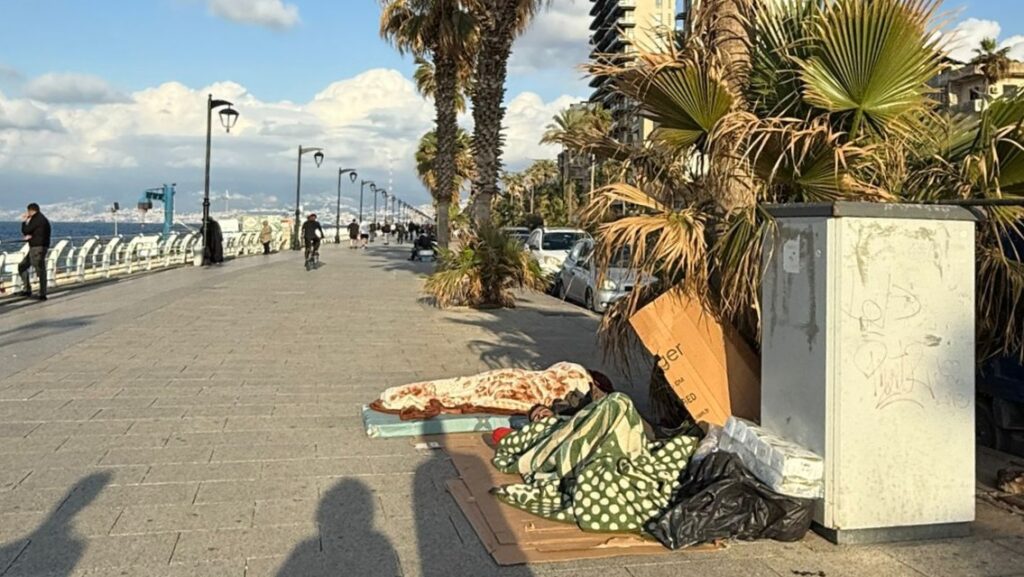
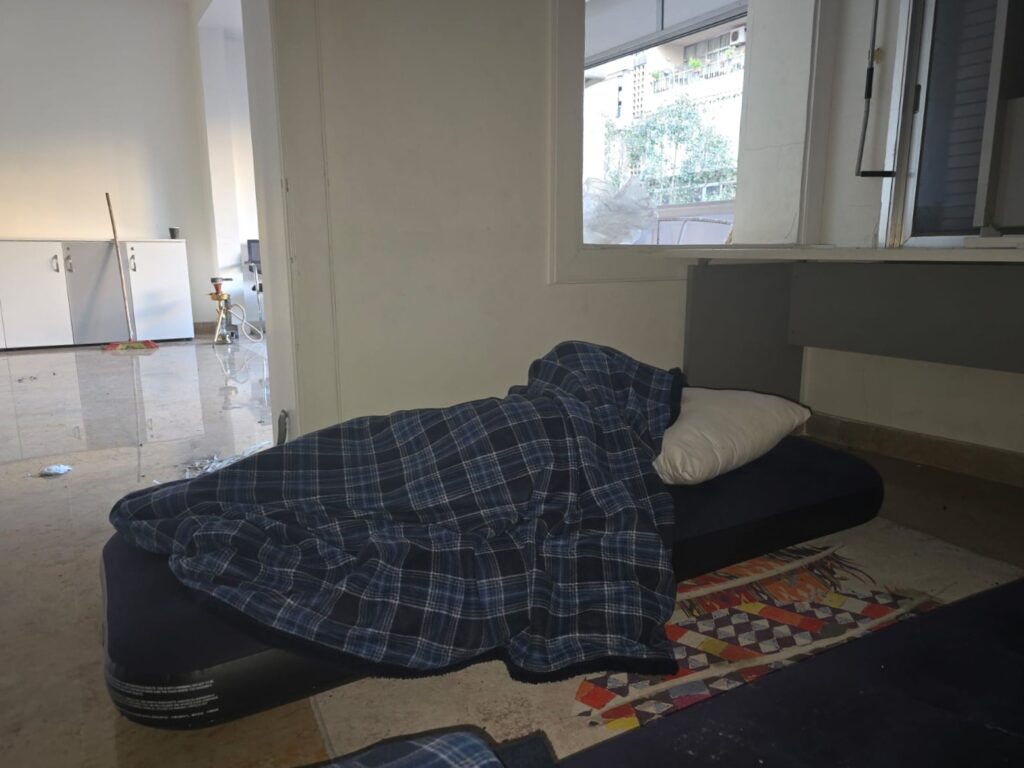
For those who have fled, the struggle continues in overcrowded shelters and schools, where survival replaces daily life. In these spaces, there is a total lack of privacy, a constant struggle to access clean water and medicine, and a growing threat from the cold, as families sleep on thin mats on the floor.
Perhaps the cruelest burden is the inner conflict of forced normalcy—the need to commute through dangerous areas to earn a living and feed one’s family while pretending everything is fine. This collective state of mind requires discussing mundane work tasks while knowing that one’s own neighborhood may have been struck only hours before.
 The resulting needs are immense, ranging from basic essentials such as baby formulas and medication for chronic illnesses to the deep psychological support required for a population—especially children—scarred by the constant hum of drones. Yet, amidst the rubble, a glimmer of hope remains, found not in politics but in the fierce solidarity of strangers cooking for one another and in the Lebanese people’s defiant refusal to be erased.
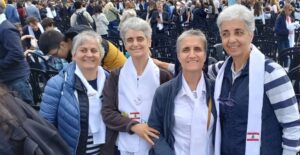
The Good Shepherd Sisters and our mission partners, present on the ground since the early days of the crisis, continue to expand our response—adapting each day to meet needs that are not only increasing, but also becoming more complex.
A Response That Continues to Grow
What once felt like an emergency is now becoming a prolonged reality. People are living in survival mode, and many are still searching for stability, unsure of what tomorrow may bring.
 Children in Crisis: A Reality Hard to Witness
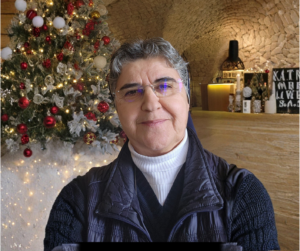
Por Sister Annie Kahwajian, coordinator of the mental health project at the Saint Antoine Community Health Center in Roueissat–Jdeideh, the suffering of children is among the most difficult aspects of this crisis. During recent visits, she was struck by what she saw: “Many of the children had no socks… they are constantly sick».
Living conditions remain harsh—cold spaces, inadequate heating, and limited access to basic necessities. Illness spreads quickly, while families struggle to meet even the simplest needs. Meals are often not prepared at the shelters, and daily routines have completely collapsed.
Beyond these conditions, deeper wounds are visible. Sister Annie speaks of young women who were never given the opportunity to learn or attend school—reminding us that vulnerability did not begin with the war but has only been intensified by it.
"It is truly heartbreaking,” she says, reflecting on families who have lost everything despite having no part in the conflict.
"Love of God and love of neighbor are inseparable; we must love our neighbor with the same heart and the same love which we have for God, or rather, it is God we must love in our neighbor».
— St. John Eudes
Under Constant Pressure: Serving Amid Fear
In response to these growing needs, the teams on the ground continue to act despite the immense pressure.
From the Saint Antoine Community Health Center, Sister Hanan Youssef describes a reality shaped by fear and urgency: “Every day, the number of displaced people increases,” she shares.
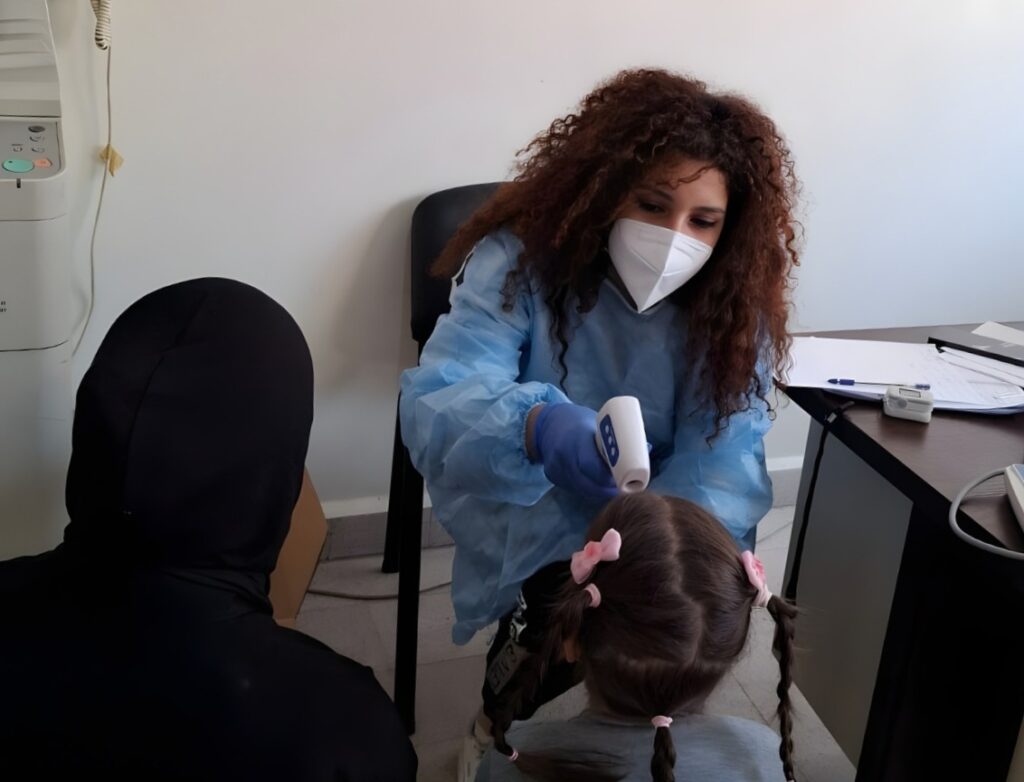
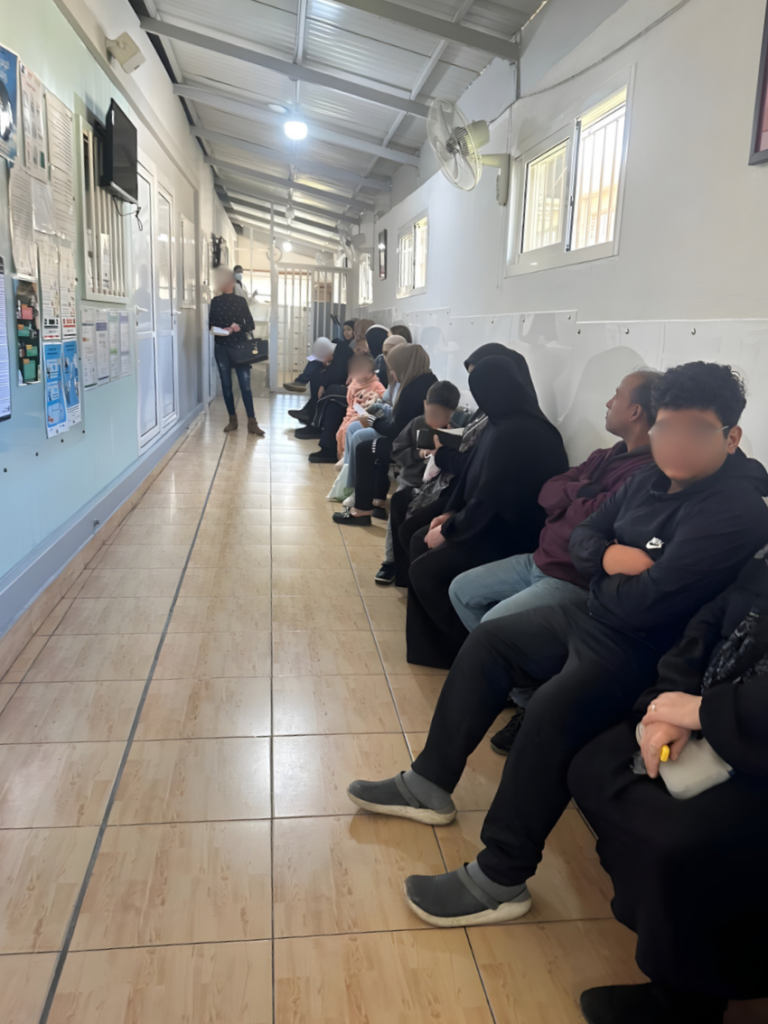
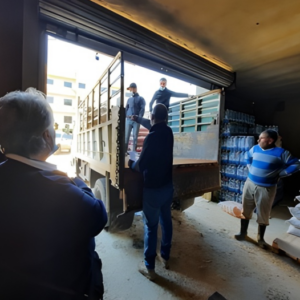 Despite the pressure, the team continues visiting shelters, providing medical care, medication, and essential supplies. Their attention is focused on those most at risk—elderly individuals, women, children, as well as patients living with chronic illnesses and pregnant women in need of follow-up care.
Even when resources are limited, their commitment remains unchanged: to welcome and treat everyone with dignity. “We provide what we can, free of charge and without discrimination,” she affirms, as the center supports both families in shelters and those hosted by local communities.
Holding On to Dignity
Across all these encounters, one truth remains constant: this crisis is not only about losing homes, but about holding on—holding on to health, to stability, and to dignity.
Behind every number is a person carrying loss, fear, and uncertainty. Yet, in the midst of it all, our sisters and partners continue to walk alongside them—offering not only assistance, but also presence, compassion, and a reminder that they are not alone.
Support our Good Shepherd our emergency response in Lebanon through GSIF, your help will make a difference for displaced families in urgent need: www.gsif.it/crisis-lebanon