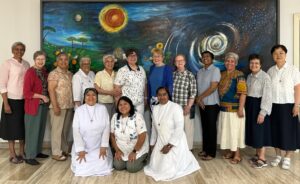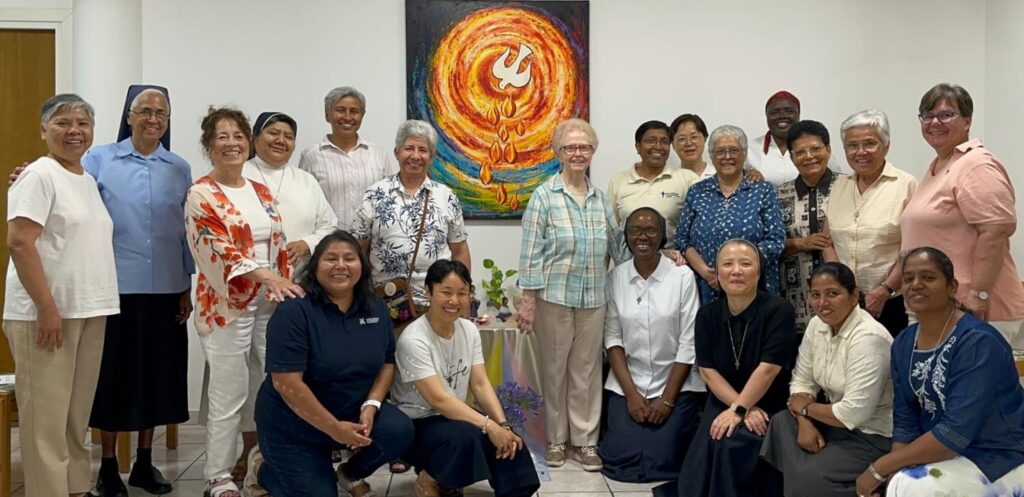
Sister Brigitte Thimbane Ndione from Senegal and Sister Olivia Ja Sein from Myanmar recently completed the UISG’s six-month “Program for the Preparation of Formators”. Both came with experience in formation ministry and a desire to accompany others more effectively. The program, however, invited them first to examine their own lives—deepening their self-knowledge, relationship with God and capacity to accompany others with freedom and compassion.
As they prepare to return to their ministries, the sisters reflect on what has changed within them and how this transformation will shape the way they accompany others.
As you come to the end of this period of formation, what has changed most deeply within you?
Sister Brigitte: This formation program has profoundly changed my relationship with God, with myself, and with others. It has been a second novitiate in my life, coming after several years of following Jesus the Good Shepherd and at a time when I needed it most.
“Indeed, during the retreat at Nemi, I found myself struck down like Paul on the road to Damascus. A turning point occurred in my life—both as a person and as a consecrated woman.
I have the joy of embracing myself just as I am and as I am becoming. I feel transformed and reassured by this love of God, and the meaning of my consecrated life is to remain the beloved and loving servant.
Sister Olivia: The UISG program was a transformative journey of self-discovery that reaffirmed my life’s purpose and deepened my understanding of human connection. Through powerful personal sharing and strong group fellowship, I felt deeply supported in my growth. The “Group Building and Dynamics” module particularly inspired me to embrace my brokenness and “mend it with gold.”
Ultimately, this experience equipped me with practical coping strategies, renewed my faith in God’s strength amidst imperfection, and reinforced that life’s true essence is to love and be loved. Empowered by these insights, I am driven to transform myself and inspire others.
What brought you to the program, and what struck you when you first began?
Sister Brigitte: I was drawn to this program to find ways to better help those entrusted to my care in their formation.
From the very first day, through the various orientation activities, I sensed something different in the approach, and that prompted me to embark on the process of transformation. Subsequently, the first session on group dynamics and team building confirmed my conviction regarding the process of transformation, and I found myself swept along, unsettled and shaken.
Sister Olivia: Initially, I applied for this training at my province leader’s suggestion. I viewed the course as an opportunity to refresh my professional skills and honor the principle that formation is a lifelong journey.
I firmly believe that effective formation of others begins with self-formation; the more I discover myself, the better I can guide those around me. Ultimately, this course expanded my self-awareness.
In what ways did the program help you grow personally, spiritually and emotionally?
Sister Brigitte: Throughout the sessions, I felt like a lemon being squeezed from all sides. Different aspects of my life were ‘diagnosed,’ culminating in the psychological evaluation process. This allowed me to delve deeper into my personal and faith journey so I could live more ‘freely, fully, and lovingly,’ to contemplate my cracks and encounter God there—for whom no part of me is bad.
I have experienced God in a different way: his closeness through the variety of forms of prayer, his love for all of creation—including me—and his reality as the Triune God, who is relationship, hospitality, and attraction.
In my life of ‘doing’—with which I had come to identify—I would react by pressing down feelings. Realizing that every emotion is a messenger, I began to identify them, name them, welcome them, grasp the grace they carry, dig deeper to understand myself, stop reacting, and experience emotional safety.
Sister Olivia: The organizers of this formation program cultivated an inclusive “safe space” that served as a guiding lighthouse for my journey, grounding me through growth assessments, mentorship, integration groups, and reflective prayer. The NEMI retreat deepened this transformation, revealing prayer as an active connection to God and a presence found in unexpected places.
Through this program, I gained clarity on consecrated life—understanding sexuality as a sacred capacity for relationship and tender love, celibacy as its intentional expression, and community as a synodal journey where every voice has a seat. Learning to name my experiences and set healthy boundaries liberated me from past confusion, empowering me to live fully, freely, and lovingly. Inspired by the legacy of women saints, I am committed to serving with great love, honoring God’s grace, and contributing to a stronger, more united community.
How has the program reshaped your understanding of leadership and the role of a formator?
Sister Brigitte: The ministry of formation is a practice of friendship, a journey of building relationships through formative conversations marked by vulnerability, inner freedom, empathy, and deep listening.
The formator joins the individual on their journey to walk alongside them, for the Holy Spirit is the primary trainer, and God works with and through our humanity, not around it.
The formator is called to exercise her authority not as ‘power over’ but as a means of empowering those entrusted to her care.
Sister Olivia: Leadership and formation are deeply intertwined. Everyone holds a leadership role—if not in community or mission, then fundamentally over oneself. This course reaffirmed that true leadership is rooted in service, while formation is a lifelong transformation rather than a final destination.
In my formation ministry, I recognize the vital importance of continuous self-updating, team collaboration, active listening, and cultivating safe spaces. Personal growth requires ongoing spiritual direction and supervision, making regular mentorship indispensable. Experiencing God’s active presence in daily life empowers me to embrace my vulnerability and face life’s challenges with joy and resilience.
Grounded in a contemplative lifestyle, I am invited to reflect deeply on daily experiences—fostering profound gratitude, a clear sense of purpose, and a deeper union with God, neighbor, and all Creation.
What did living and learning in an intercultural community teach you?
Sister Brigitte: So many cultures all at once—wow! Living and learning alongside various Sisters from different cultures has taught me: to be patient, to experience vulnerability, to be creative in connecting with other cultures, to take the time to listen to others so I can hear their truth, and finally, to marvel at the richness that comes from diversity.
For six months, I experienced the universality of the Church and how charisms unfold in every context. I felt even more deeply the weighty responsibility of consecrated life to bear witness to communion and to live out synodality.
Sister Olivia: Initially, building trust across diverse cultures required concerted effort, but it quickly revealed the unique beauty of every nationality and Congregation. Listening to others share about their specific spiritualities, charisms, and global missions deepened my appreciation for every religious life and the enduring faith of our founders and foundresses.
The joy of celebrating our shared diversity during Cultural Day reinforced that intercultural living is essential as we move toward common formation. Grounded in my prior experience in the Philippines, this program has inspired me to cherish my own heritage while honoring and respecting the cultures of others.
As you return to your ministry, what will you carry forward from this experience?
Sister Brigitte: I have a clearer sense of who I am and of my potential today. But the process continues as there are areas for improvement; I’ll keep going because life isn’t linear.
Today, I am moving – and continue to move – from a state of wanting to do more, of being preoccupied, towards a more measured pace, so that I may walk in God’s presence alongside others, my companions in grace. For all of this, I give thanks to God, and I am grateful to the Congregation for offering me this opportunity.
Sister Olivia: Though intense at times, this six-month program has energized me with practical wisdom for formation ministry and beyond. I return to my work with renewed courage, confidence, and a deep realization that self-care is essential for both formators and formees.
I have learned that a formator’s personal practice speaks louder than teaching—our primary mission is to accompany formees toward Christ-like maturity by integrating their human, spiritual, intellectual, and pastoral growth within a safe, trusting environment. Grounded in silence, continuous self-reflection, and gratitude for those supporting my own growth, I am empowered to guide others on their vocational journey.
Both Sr. Brigitte and Sr. Olivia Ja Sein are deeply grateful to God, the UISG community, their unit leadership, the CLT, the generalate community, and their sisters, mentors, and peers for this enriching experience and would like to share with you all this song of gratitude.