By Sr. Myriam Theresa Bui, Province Communicator, Vietnam (Province of East Asia)
For over two years, Sister Cecilia Văn and other Good Shepherd sisters and partners in mission in Cà Mau, Vietnam, have supported more than 65 women who run small businesses or work as shrimp farmers in the surrounding villages of Hoa Thanh, Hoa Trung, and Ao Kho.
To provide these women and their families with more sustainable support, empowerment, and economic development, the sisters operate a micro-credit project that, with support from Fundación Internacional del Buen Pastor (GSIF), connects the women with benefactors in Toronto. The initiative is part of an integrated commitment of the sisters to promote economic justice, ensuring that women in disadvantaged situations and their families gain access to sustainable economic opportunities that allow them to build dignified and self-reliant lives.
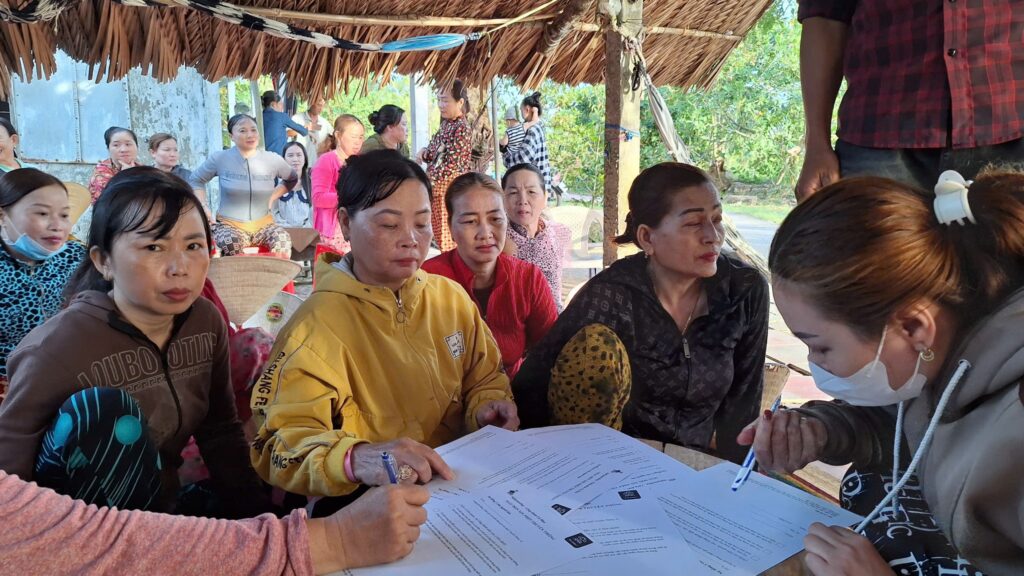
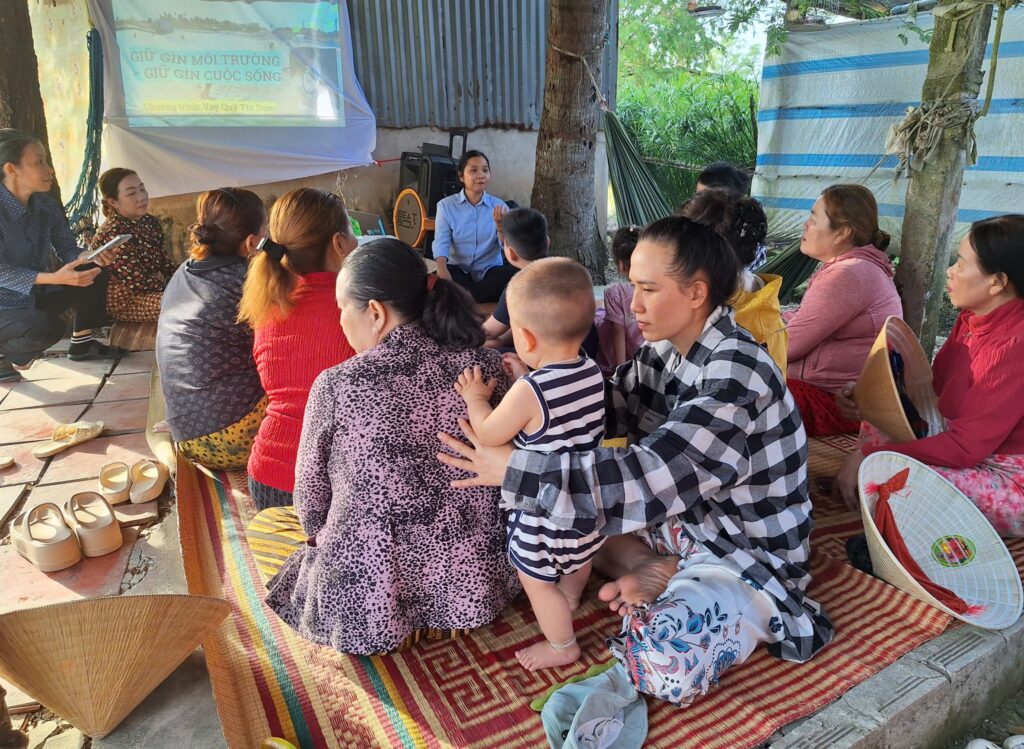
As part of their regular activities, the project’s coordination team recently organized a communication session for the rural women involved in the project.
The recent session centered on the theme “Environmental Protection – From the World to Each Family,” and aimed to increase awareness of the close link between the environment, family health, and long-term well-being. Beginning with global environmental issues, the presentation was practical and accessible, closely relating to daily life in the local context, such as water sources, household waste, sanitation, and nearby rivers, canals, and waterways.
Through presentations and discussions, the women realized that improving family life depends not only on economic change but also on raising awareness and changing daily habits. A clean and safe environment forms the foundation for healthy families, better care for children, and improved spiritual and emotional well-being.
Many participants shared their family’s daily realities and appreciated the practical suggestions provided. Notably, after listening and exchanging ideas, the women responded positively, demonstrating their commitment to taking small but concrete actions, starting with their own living environment.
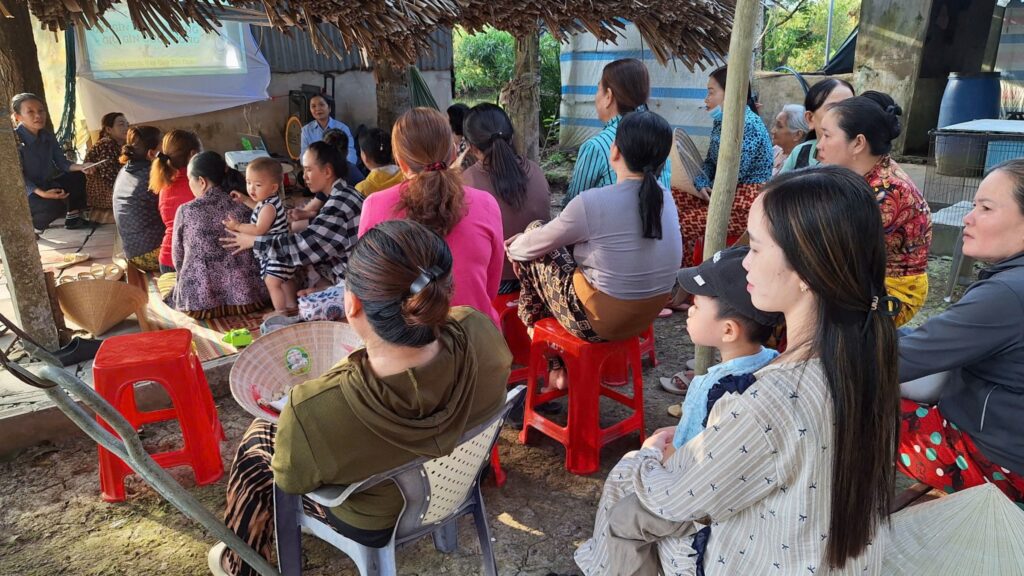
One participant said, “I will no longer throw my rubbish into the rivers, canals, and waterways that flow nearby.” Many other women echoed this promise.
Although this is a small action, it has significant meaning in protecting water sources, shared environments, and the health of their families and communities.
The session not only provided the women with valuable knowledge but also fostered a sense of responsibility and solidarity in caring for our common home.
Through this activity, the micro-credit project continues to affirm its holistic development approach: supporting women’s economic growth, raising awareness, protecting the environment, and building sustainable, happier family lives.